‘I Wanted to Do More’: Seth Gillis ’25 M.A. shifts from teacher to counselor to fill need in his Charlotte community
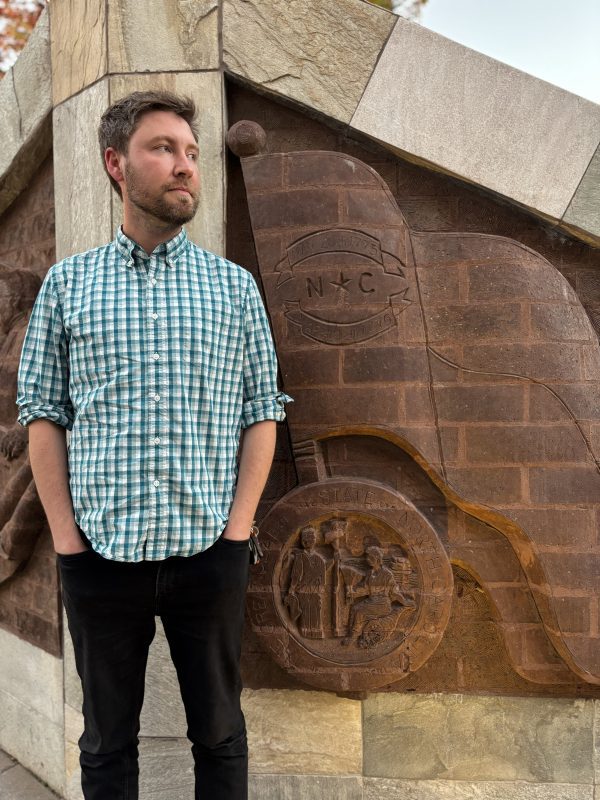
Beyond the classroom, teachers carry invisible titles — counselor, social worker, therapist — because no one spends more time with students than they do.
Seth Gillis experienced this for ten years as a classroom teacher and decided that if that was going to be asked of him, he’d better get the training for it. “I found myself recognizing that the needs of my students were so far beyond my curriculum, and the more effort I put into providing social-emotional learning in conjunction with the curriculum, the more I realized that I appreciated that side of education and getting to know and support my students in that way.”
Teaching remotely during the COVID-19 pandemic and then seeing the results of that as students struggled post-pandemic made it all the more dire for him: “I wanted to do more for them, and that led me to school counseling.”
Gillis describes himself as a “rare, born-and-bred Charlottean” and hasn’t just watched Charlotte-area schools change in his own lifetime, but hears about it from his 97-year-old grandmother, who attended the same middle school where Gillis eventually started teaching, and his father, who attended the middle school where he is now a counselor. Needless to say, the city is in his blood, so becoming a Niner was only natural.
When looking back on his time at Charlotte, the relationships he developed with his professors stuck out as one of the brightest spots. “They really meet you where you are. I had some ups and downs throughout the program, as I think most people do, and I remember walking into class for my first internship, and our professor had read all of our journal entries from that week and noticed we were all going through some heavy stuff. So it wasn’t business as usual — instead, we were humans in that moment, she addressed the weight in the room and let us talk through some of it with each other, and most importantly, she let us go a little early because we knew how much we had on our plates and how much we needed that. I just think about the humanity of that moment, and that’s just one small example.”
The care and humanity shown from faculty to students continued to be a theme for Gillis. His mentor, Clare Merlin-Knoblich, met him where he was and treated him like a person first. “She was everything in terms of helping me figure out what I needed in times when I didn’t know, she helped me work through that… In a difficult program, I feel like that’s what was most important,” he said.
Merlin-Knoblich clearly saw that same humanity reflected in Gillis, saying, “Since his initial interview with our program, I felt his genuine compassion and commitment to the students he supports, formerly as a teacher, and now as a school counselor… his students are fortunate to have him, and UNC Charlotte is fortunate to have had him as a student.”
And Gillis does his best to absorb that compassionate approach that his mentors have taken with him and reflect it toward his students. “In schools, there’s a tendency to be authoritative and rigid with the rules, but I think I take that humanity that my professors have and I bring that into my sessions, the hallways and the lunchroom, and just try to get to know my students as humans instead of just students getting a grade.”
Much as Gillis grappled with the ever-expanding role of a teacher, he’s also had to contend with the “definition” of a school counselor. School counseling has drastically changed over the last decade, as guidance counselors 10 or 20 years ago were primarily responsible for class schedules, college preparation, or career guidance, with any mental health or social-emotional focus coming secondary, only if a student presented concerning behavior. Now, though, many schools are transitioning to a true counselor role, focused on helping students process and cope with the stresses of school, their home lives and the uncertainties that come with growing up. However, some schools are reluctant to make this shift, and others still wish they could but are too understaffed to do so, and thus ask staff hired for one purpose to also handle the other.
Gillis grew frustrated early in his clinical work with mentors outside school settings, believing they didn’t grasp the hybrid role of mental health, career and advising counselor. On any given day, he might address a suicide risk, check in with students who have ongoing needs, manage 504 plans for those with disabilities or respond to threats. “You have to know going in that no day, no hour, no minute looks the same,” he said.
In addition to his school counseling license, he was able to add on his LCMHC-A certification, so he’s able to work in clinical settings as well, if he chose to. However, Gillis says he has no intention of leaving schools — he’s been given a full-time position at the CMS school that provisionally hired him.
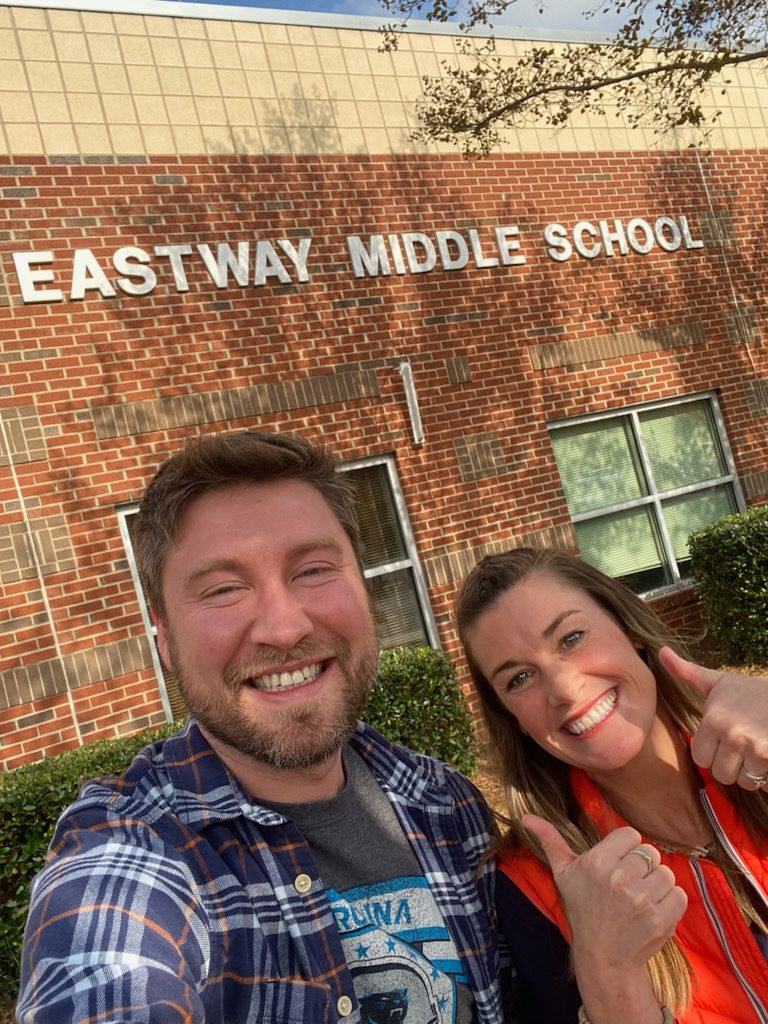
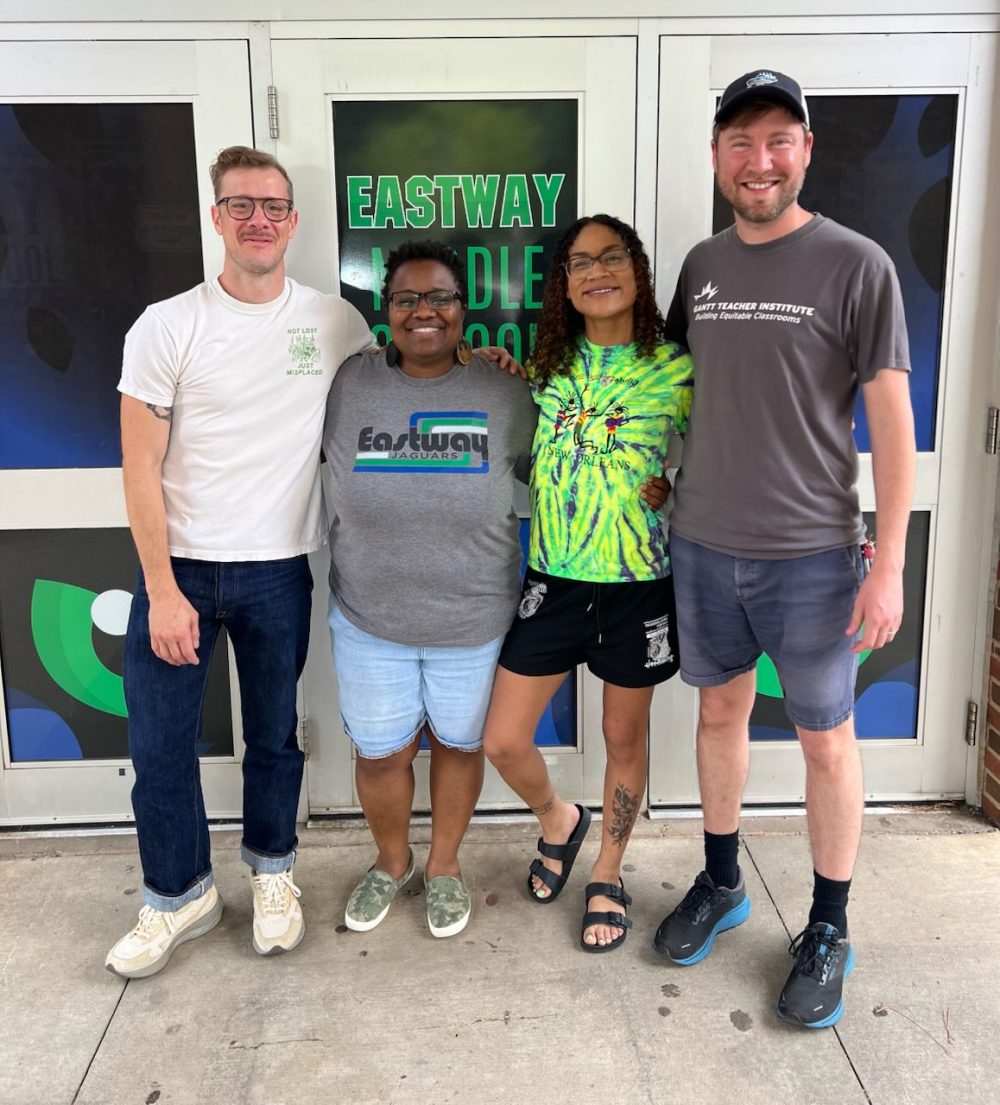
Since being provisionally hired, he has found value in his mental health training. He applies trauma-informed practices even in quick 10-minute student check-ins, rather than the hour-long sessions peers in clinical settings often use for similar needs.“I’m able to use these tools that we learned in class that you might think wouldn’t lend themselves as well to school counseling, but in practice, they really do, and it’s gone a long way for me in my office.”
“It’s one of the most diverse schools in Charlotte-Mecklenburg, nearly 70% multilingual learners,” according to Gillis. With so many students whose first language isn’t English, he’s been very thoughtful about his coursework and the techniques he’s sought to learn more about in order to best support them. “I’ve been able to incorporate a lot from my Expressive Arts class. If there’s a language barrier, that tends to really help.”
Working with the diverse population in east Charlotte where his school is located, Gillis has learned firsthand the power of advocacy. “Helping families get what they need — collaboration with our school social workers and community organizations has been my most unexpected but maybe my favorite part of the job.”
Gillis hopes to be able to make that advocacy a cornerstone of his growth in his counseling journey. He believes school counseling is his calling and wants to stay planted in CMS, working with diverse student populations like the one at his current school, but dreams of maybe leading a team of counselors at a school or at the district level. He’s starting small for now, as just one of two counselors at his middle school, but the Niner spirit of never settling for less is already pushing him to do more. “I’m already beginning to advocate at the district level for how much a third counselor would help us, with the needs of our families and the goals of our students, using research and data. I want to really strengthen the school counseling profession as a whole, because I really think if we want students to be successful academically, behaviorally and in life in general, we have to have more mental health supports in our schools.”