Highlighting the impact of the 2026 retiring class of Cato College faculty
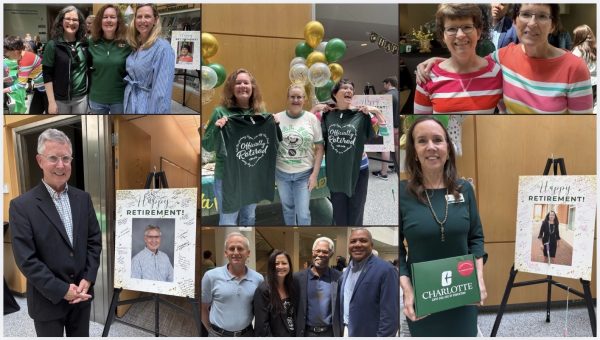
Cato College has an exceptional class of retiring faculty this year, with countless publications, dozens of awards and over 100 years of teaching experience between them. Many thanks to Jack Culbreth, Warren DiBiase, Dawson Hancock, Charles Hutchison, LuAnn Jordan, David Pugalee, Rebecca Shore, Shawnee Wakeman, and Chuang Wang for their years of dedication and service — all will be deeply missed, and their impact will be felt for many years beyond. Cato College has been blessed to have such hardworking experts as part of our team for so long, and we wish them well in their well-earned retirement.
Several of these storied educators had some parting thoughts to share about their work and the impact they have left on the college. From their entry into education to the work they’ve contributed to the field at large, we’ve gathered just a handful of their stories worth sharing.
Charles Hutchison
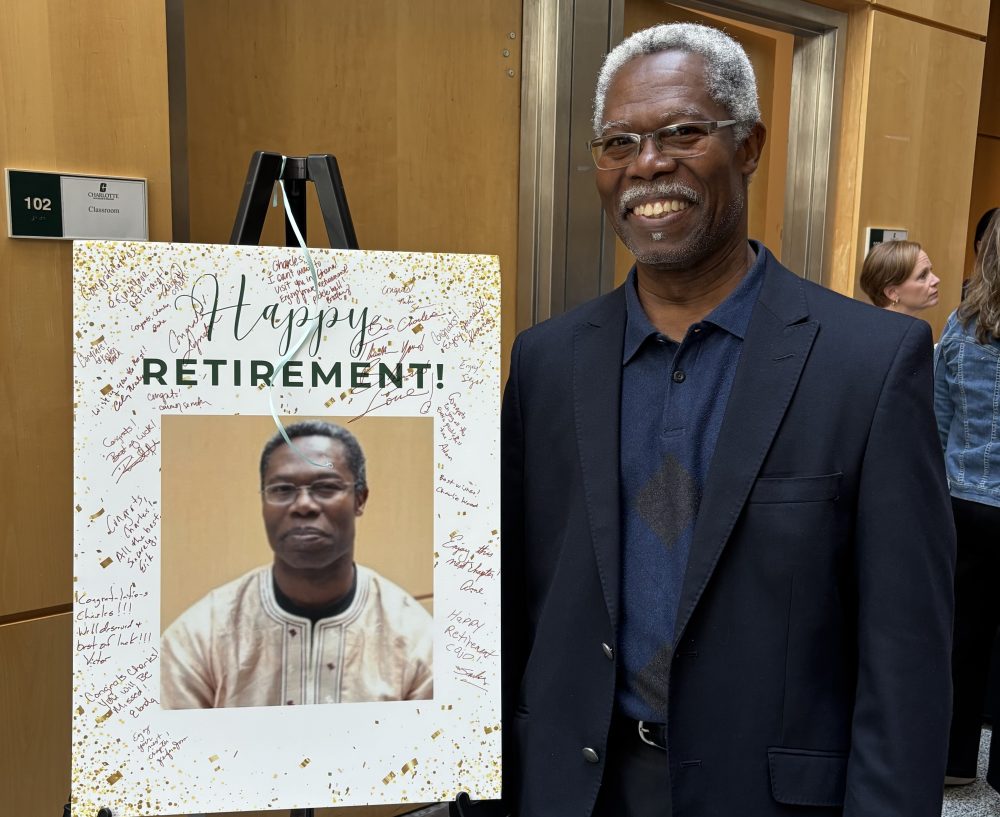
Charles Hutchison joined UNC Charlotte back in 2003, working 23 years for the university. When he was hired, the school was undergoing an identity transition, and he was excited to be a part of several initiatives that helped it become what it is today. As part of these initiatives, Hutchison participated in discussions on the UNC Charlotte faculty council to help retain students on campus over the weekends. Along with his work on the faculty council, he was able to cultivate lasting relationships through collaborations with different college units. These included the Center for Teaching and Learning, Department of Africana Studies, Office of International Affairs, African and African-American Faculty and Staff Caucus (as the chairman), and Phi Beta Delta Honor Society for International Scholars (as the president).
Hutchison is originally from Ghana, where he graduated college. He studied science, specifically zoology, botany and chemistry. He landed on zoology as his official major in his final year of college, choosing it “because it was known as one of the hardest majors in the university at the time, and so it was cool to be one of the ‘smart’ guys.” He worked for several years as a laboratory scientist in immunogenetics in Hungary, then later in the United States. It was here in the U.S. where he began teaching high school science, before being urged by friends and family to, like his father before him, become a professor.
When asked about his proudest accomplishments as a professor, he replied, “As an African, I come from a tradition where professors are expected to profess ‘deep knowledge.’” Aside from publishing several books/articles, working as editor and chief of a journal, and his work being featured in the Times Higher Education, his proudest personal accomplishment as a professor was when his students noted he had taught in ways that challenged their thinking so much he “broke” their brains.
Hutchison is leaving a legacy of effort made toward what is now the largest doctoral program in the university, the urban education concentration of the Ph.D. in Curriculum and Instruction. He also was an active advocate for his fellow Niners, whether faculty, staff, or students. “As the chair of the African and African American Faculty and Staff Caucus, I contributed in working with then Chancellor Dubois and Provost Joan Lorden to address the issues facing faculty and staff of color on campus—including promotion, tenure, and retention issues—as well as the needs of students of color, especially as the demographics of the student population was changing.”
Shawnee Wakeman
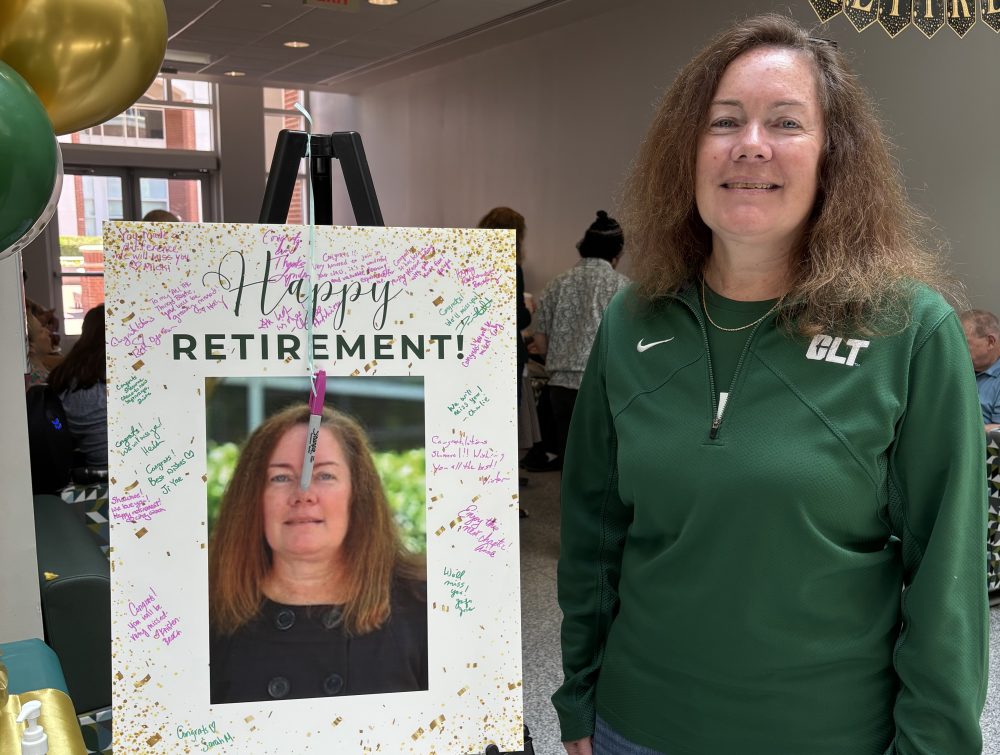
Shawnee Wakeman has been teaching for 30 years, spending a whopping 21 of those at UNC Charlotte. If you asked young Wakeman what she wanted to be when she grew up, professor was always her top choice — she even said so in her high school yearbook. In fact, it was during high school that she worked as a camp counselor for disabled children, which showed her how much she loved working with and supporting them. This led to her areas of study as a researcher: general curriculum access, alternate assessments and inclusion of students with extensive support needs.
While at UNC Charlotte, she helped to change the dynamic and opportunities of clinical faculty and recognize them for their efforts and accomplishments. As said by Wakeman, “[Former Dean] Mary Lynne Calhoun was always willing to let me take on a new challenge if I asked. She supported our original efforts to create a promotion process for clinical faculty that we enjoy today.” She also leaves behind a strong legacy of research: “The research we were able to do and the technical assistance we were able to provide has significantly impacted the lives of students with disabilities and their teachers.”
Wakeman loved the opportunity to support her students in their journeys to become special education teachers. Her program has produced many award-winning teachers, including the NCACTE Beginning Teacher of the Year winner in 2026 and runner up in 2025. She shared, “Just as impactful to me are the students that worked so hard to finish the program when there were so many obstacles along the way. Their perserverance inspired me. I will miss teaching and engaging with my students.”
When asked about how she views her impact on the college, Wakeman answered, “Helping to shape future educators is a gift I was given. They impact the future. I also think my federal grants and centers with all the resources continue to impact teachers and students through dissemination. I hope the clinical faculty in the Cato College of Education and the university continue to thrive and push for opportunities and change to showcase the expertise and value they represent.”
Warren DiBiase
Warren DiBiase began his career at UNC Charlotte in 1997, nearly 30 years ago, when he was appointed assistant professor of middle/secondary education. Before then, he taught high school juniors and seniors, and even considered becoming a principal at one point. It was actually the path to principalship that eventually led him to Cato College. While earning an M.S. in secondary education, one of his professors asked him to stay after class. What he said changed the trajectory of DiBiase’s career, professing that his writing was doctoral student quality and urging him to pursue a doctorate.
DiBiase decided to do just that while continuing to work in high school education. This presented an issue, as the college where he wanted to pursue a doctorate was two hours away, and the doctoral committee wanted to reject him: they had never had a part-time doctoral student before. That was when one committee member, Patricia Obenauf, stood up for him. DiBiase shared, “She did not know me or anything about me and unconditionally spoke up in support of me, convincing the other committee members that it could be done and she was certain that I would be successful and earn a doctorate.” After the completion of his degree, he decided not to return to his role as principal, and instead found an assistant professor position at UNC Charlotte.
When asked what his greatest accomplishments were at UNC Charlotte, his immediate instinct was to focus on his students. “Being told I was the best professor they ever had,” he said. Second to this was a research collaboration with Todd Steck, a microbiologist and biology professor, and Helene Hiller, a civil engineering professor, to write a NSF FIPSE grant, with DiBiase as the primary researcher. He distinctly remembers sitting in his office one afternoon: “I got a call from the NSF, they were going to award us the three-year, half a million dollar FIPSE grant!”
LuAnn Jordan
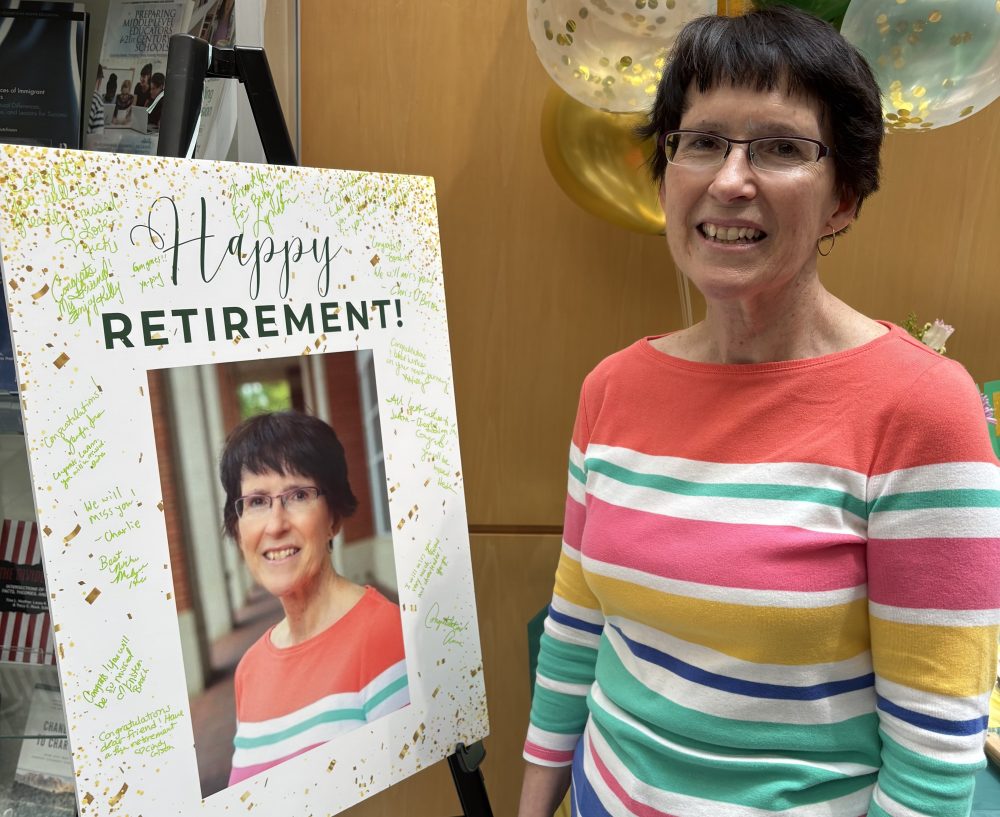
LuAnn Jordan has spent her entire postdoctoral career at UNC Charlotte, a full 29 years. She was hired following graduation to advise the special education program’s master’s degree. Jordan came equipped with some previous teaching experience, having first been a special education teacher in Farmville, N.C. In college, her focus of study was on learning disabilities, which she found interesting because, in her words, “the same person could have learning challenges and strengths at the same time.” She loved the world of learning and research opened to her through higher education, but she also loved teaching her elementary students; ultimately, she brought both inspirations together to become a college professor. “The thought of investing in the lives of beginning teachers was very appealing to me.”
She thought it an honor to work with teacher and other professionals who help people with disabilities. When asked about her impact on the college, she replied, “I’ve been able to invest in the lives of wonderful teachers for many years, and to help to build a program that keeps students with disabilities front and center. When I hear that a teacher who has come through our program or taken a course with me is out there serving in education and doing well, I feel so grateful!”
Rebecca Shore
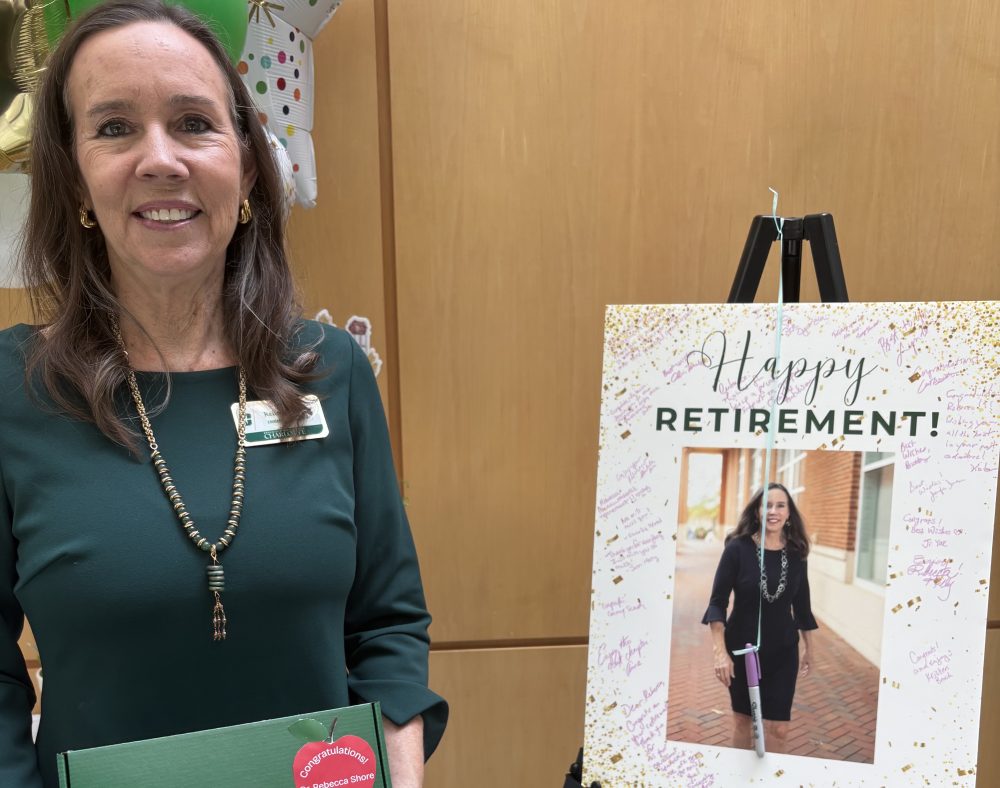
Rebecca Shore has had an impressively long career in education: 46 years. 28 of those were spent working in K-12 schools, before joining UNC Charlotte for the other 18. While in school herself, she primarily studied school leadership. Her main focus has been preparing teachers to become principals through the MSA program, and helping principals to become superintendents in the Ed.D. program.
It was actually her time in the K-12 school system that inspired her to become a professor. Shore has always cared deeply about education and wanted to work toward “fixing” K-12 schools. To her, becoming a professor “was the next logical step.” She considers obtaining a $6 million Principal Fellows grant for the educational leadership department to be one of the most impactful moments of her career. She has also written five books, three of which are proudly for sale in the UNC Charlotte bookstore.
Dawson Hancock
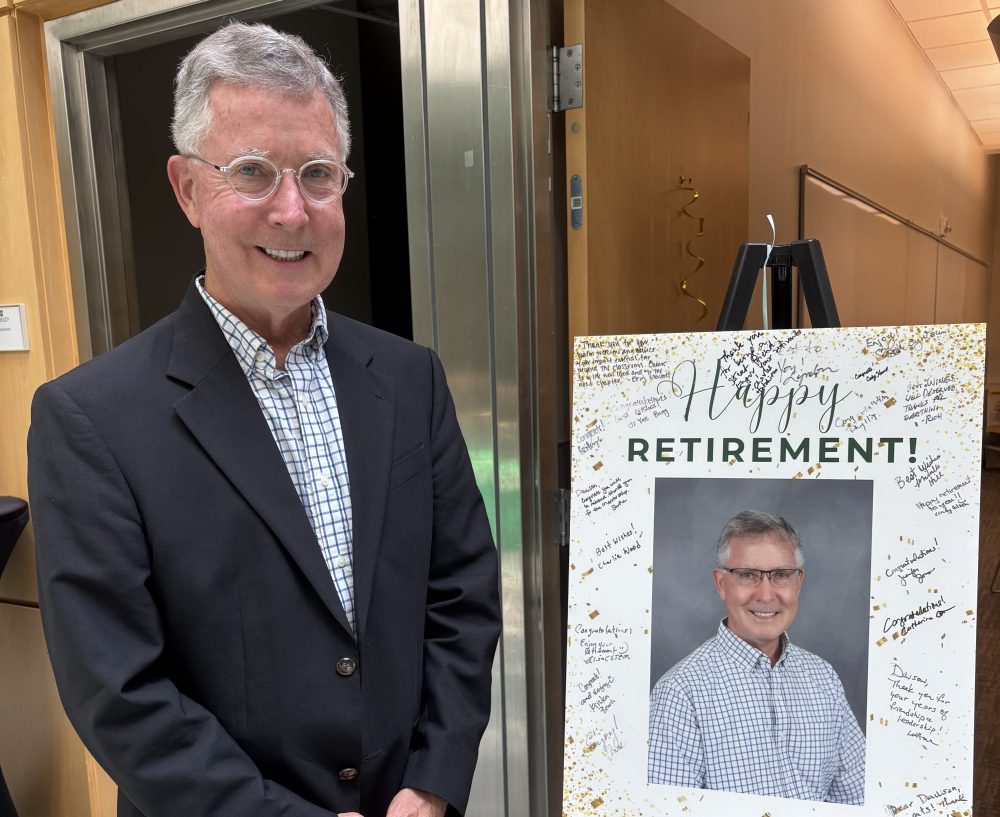
With 31 years at UNC Charlotte, and 40 teaching, Dawson Hancock leaves behind his extensive efforts to prepare and support future educational leaders. In 1995, he was hired as a UNC Charlotte faculty member, and brought with him extensive experience working in North Carolina schools and non-profit organizations, where he served as an evaluator for programs designed to enhance student learning and the preparation and retention of high quality teachers and administrators. He has had a long term commitment to the betterment of education, and that commitment shows itself even further in how involved he was at UNC Charlotte. He served on the University Faculty Committee, University Faculty Council, University Academic Planning and Budget Group, College Faculty Council, College DEI Book Study Group, Department Review Committee as elected chair, and the ERME Program Portfolio Evaluation Committee.
One of Hancock’s most impressive accomplishments is his honorary doctoral degree presented by the Ludwigsburg University of Education in 2025, during the 30th Annual German- American Research Symposium. This came out of his efforts toward international collaboration. He served as appointed leader on the college’s German-American Symposium Planning Committee, a role he wanted due to his desire to share what he had worked on at UNC Charlotte with his German colleagues, and learn from them as well. These efforts only add to the many extensive ways he has worked toward the betterment of education, not just in the US, but across seas.
Chuang Wang
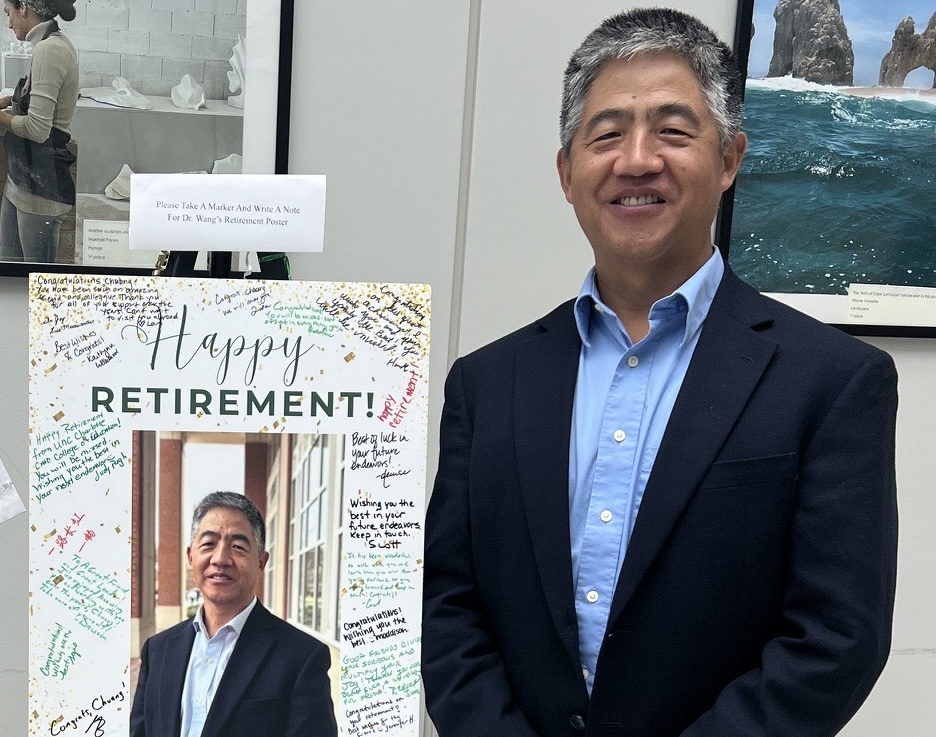
For 32 years, both in the U.S. and abroad, Chuang Wang has led an accomplished and fulfilling teaching career. Though he did not initially gravitate toward education, he fell in love with the classroom. “I could see my students’ happy faces and bright eyes during class. My self-esteem skyrocketed when I realized that I could help others learn.” He began to see the value in becoming a professor, and eventually pursued a graduate degree. After eight years of teaching English in China, he pursued a Ph.D. focused on English language learners’ self-efficacy beliefs and self-regulated learning behaviors. He has since developed an instrument called the Questionnaire of English Self-Efficacy (QESE), which has been translated into six languages and used widely in a variety of countries. He has been recognized as one of the world masters in English language education by China Daily and the top 2% of research scientists worldwide by Stanford University.
22 of his 32 years in education have been spent at UNC Charlotte, during which he led several study abroad courses to China, Korea and India. These courses created some of his favorite memories at the university, since he was able to introduce Asian education and philosophy to American students and even some faculty. For his contributions to overseas education, UNC Charlotte awarded Wang the Faculty International Education Award in 2019. Just a year earlier, he received the Harshini V. de Silva Graduate Mentor Award for his success in mentoring graduate students. “I feel very happy that I have helped my students with their career development through collaborations in research, grant writing, and publication.”
But by far, Wang’s most impactful accomplishment at UNC Charlotte was his service as the chair of the department of educational leadership. “This service has extended my accomplishments from teaching and research to service. In addition to mentoring junior faculty members and evaluating faculty members’ performance, I have made significant and impactful recommendations and decisions in the hiring of faculty and staff members, recommendations for promotion to tenure and associate professors and promotion to full professor.”
by Jenna Beam