Student Success Champion: Oklahoma State leader wins inaugural Cato College Distinguished Alumni Award
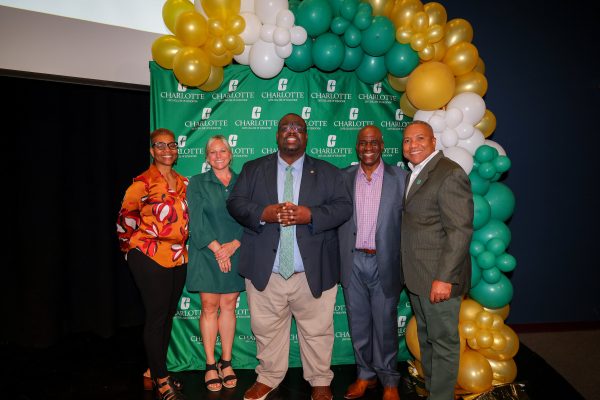
Clyde C. Wilson Jr., Ed.D. ‘13 has transformed the educational trajectory of first-generation and low-income students at Oklahoma State University through visionary leadership, mentorship, and a sustained commitment to expanding access to graduate education. As the inaugural director of the Ronald E. McNair Post-Baccalaureate Achievement Program and the associate vice president for access and community impact at Oklahoma State, he developed a comprehensive scholar development model that integrates rigorous undergraduate research, faculty mentorship, and graduate preparation. He has mentored students to selection as Beckman Scholars, Goldwater Scholars, and Udall Scholars, among other honors, with 94% enrolling in graduate school immediately after graduation.
But beyond the impressive outcomes, Wilson’s work reflects a deeply personal commitment to student success – one that he had instilled in him and honed into his personal approach to education right here at UNC Charlotte. It’s this commitment and continued Niner spirit that earned him Cato College’s inaugural Distinguished Alumni Award, nominated by Professor of Educational Leadership Lisa Merriweather and presented by Director of Alumni Engagement and Teacher Induction Elisabeth Wilson. He accepted the award at the college’s April awards ceremony and celebrated alongside his father, Clyde Wilson Sr., and many of his former professors.
A Niner Helping Niners
A Fayetteville, North Carolina native, Wilson first became a Niner in 2007 when he became a residence education coordinator, first in Sanford Hall and later in Greek Village. Even then, he had an eye for helping students succeed: he organized living-learning communities, mentorship programs, and co-curricular programming that increased academic motivation and sense of belonging.
He soon sought his doctorate in educational leadership through Cato College. Wilson said, “Everything in my professional career really started at UNC Charlotte.” He recalls Chancellor Emeritus Phillip L. Dubois encouraging University staff to use their educational benefits and remembers thinking to himself, “Well, I can do that – and I can bring some students with me.”
He recounted a story from his time in residence life when he would tell students to use the tutoring resources on campus, but it was hard to convince them it was worth going. When he entered the doctoral program, he started using the graduate tutoring office, which was just across the hall from the undergraduate tutors he’d been pointing his residents to. “It’s one thing to say ‘Go take advantage of this resource,’ versus, ‘Hey, let’s go together!’ That’s the philosophy I really bring to the table.”
It’s this kind of community-based approach that has created so many of the individual success stories Wilson’s work is responsible for. Whether mobilizing campus donors to raise scholarships for first-generation students to pursue their education, expanding access to study abroad and international learning opportunities that broaden students’ worldview or leading from within on the Stillwater Public School Board, he consistently acts with community in mind first, solving problems that matter to the everyday lives of the people around him, be they students, families, or constituents.
An Example of Excellence
While at Charlotte, Wilson’s dissertation explored the impact of support systems on the persistence of Black men in higher education, and he credits much of his own persistence to his mentor and dissertation chair, Lisa Merriweather. “She was tough as nails, but she was fantastic.”
He shared that during his dissertation process, he had moved into a new role at NC State, so he was finishing his program remotely, which was no easy feat. Merriweather continued to challenge him, and at one point called his analysis surface-level — “in the politest way possible,” he said — but offered to meet him in person to go through everything and discuss how it could be improved. They met at a Starbucks in Greensboro and went through the work line by line, no matter how long or tedious a process it may have been, and came out with a product they both could be proud of. Ultimately, Wilson’s dissertation earned the Legacy for Leadership Dissertation of the Year award from the educational leadership department.
Though she challenged him, he challenged her too. She was an untenured professor, and he was the first doctoral student she had ever advised. But even without trying, Wilson was always teaching. Merriweather shared at the ceremony, “I learned as much from him about how to be a mentor as he did from me how to conduct and write research. He was as excellent a teacher as he was a doctoral student.”
Wilson said of his relationship with Merriweather, “When I look back as an educator and think about an example of what excellence looks like, I realize it does not always emerge from the classroom. Sometimes it’s someone saying, ‘I’m going to challenge you, I’m going to hold you accountable because I know you can do it, but I’m also going to provide that moral support along the way so that you can make it happen.’ She became the example for me to work towards and accomplish my goals, and established the standard I would ultimately expect from myself.”
The Professional Is Personal
Today, Wilson serves as that same sort of inspirational figure for the students he mentors at Oklahoma State. He has opened doors to advanced education for hundreds of students, creating pathways that will continue to shape the next generation of scholars and educators through the McNair Scholars program and support of other TRIO programs at OSU. Under his leadership, Oklahoma State University became one of only four institutions to earn the Insight Into Academia HEED Award for 14 consecutive years, five of those years under his direct guidance, and was also designated a Higher Education Excellence and Distinction Champion. More recently, he led the university to achieve the First GenForward designation, underscoring his commitment to first-generation college students.
But it’s his journey from first-generation, low-income student to national leader in higher education that makes him a relatable inspiration to his students, demonstrating that they too can grow into scholars with resilience, empathy and transformative impact. To quote Merriweather’s nomination, “In his work with rural youth and college students, Wilson meets learners where they are, listening, encouraging and celebrating their strengths. His genuine, freehearted approach enables him to connect meaningfully with students at every stage. Drawing on his lived experience, he demystifies the college journey, helping students navigate challenges with confidence while cultivating a sense of belonging. Equally, he engages families as partners, demonstrating the power of a community working together to support a student’s aspirations.”
Removing of barriers to education, creating a culture of care and community and meeting learners without judgment or expectation while equipping them with tools to succeed at the highest levels? It’s no coincidence that those are the exact same goals Cato College strives for and teaches its graduates to work toward in their education careers, and it’s why Wilson was the perfect choice for the college’s inaugural Distinguished Alumni Award.