‘Scholarship that Serves the Community’: Charlitta Hatch ’25 Ph.D. wins CMS school board seat with priorities driven by doctoral research
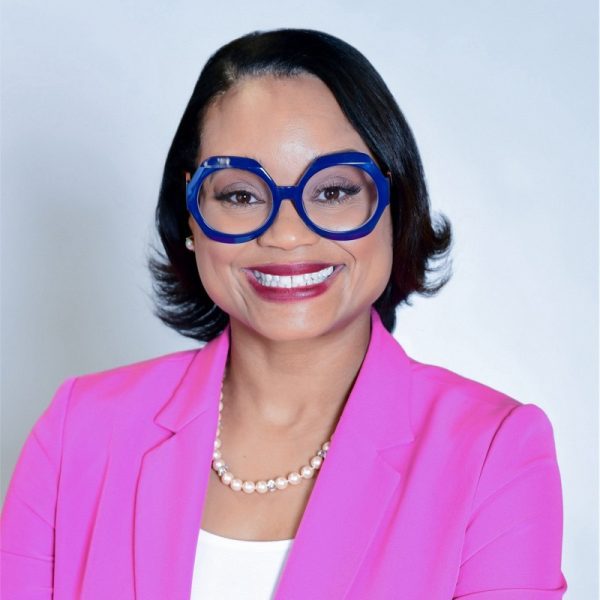
Academics often love to say that their research drives real change in the world, but sometimes it’s hard to prove that it does. Charlitta Hatch, however, has some pretty concrete proof.
Earlier this year, she ran for Charlotte-Mecklenburg School Board in District 1 and won, defeating several other candidates. She defended her dissertation in urban education just 24 hours before the election — truly a remarkable feat — and shared that it was her studies in that concentration of Charlotte’s curriculum and instruction program that drove her to run in the first place. She sat down to answer a few questions with us to share more about how and why she chose this journey.
Q1: You said your doctoral studies contributed to your desire to run — can you elaborate on that? What lit that fire in you?
My doctoral program helped me find my voice in ways I didn’t fully expect. Engaging deeply with theories of race, equity, and family engagement forced me to reflect on my own positionality as a Black mother, as a sister to a Black boy who had a very different schooling experience than mine, and as someone who has long navigated public education systems with both joy and caution.
The coursework, reflections, and research pushed me to interrogate those experiences with a sharper lens. I realized that my story, my family’s story, and the stories of the Black mothers in my study were not isolated they were part of a larger structural pattern. That clarity lit a fire in me. I could no longer separate what I was studying from what I was witnessing in real time. The program gave me the courage and conviction to step forward and say, “If I have the knowledge and tools to make change, then I also have a responsibility to act.”
Q2: What platform did you run on, and what is important about those policies or issues to you?
I ran on a platform called Log In. Level Up. Lead Forward.
- Log In — reconnect families, rebuild trust, and bring transparency into how decisions are made.
- Level Up — ensure every student has access to excellent, affirming educational opportunities, and invest in data-driven strategies that close gaps and expand possibilities.
- Lead Forward — embrace innovation, prepare students for a rapidly changing world, and govern with integrity, accountability, and a focus on the collective future.
This platform is important to me because it centers what I believe: strong schools begin with strong relationships, brave leadership, and a commitment to meeting the moment especially as public education faces unprecedented challenges.
Q3: How did you balance school and campaign life, particularly with the election so close to your defense?
The honest answer is that I didn’t balance them. I integrated them.
My campaign and my dissertation were rooted in the same purpose. I knew I couldn’t keep writing policy implications about family engagement and equity during a time when public education is being dismantled in front of our eyes and not try to put theory into practice.
Every chapter I wrote made canvassing feel more urgent. Every conversation with voters gave deeper meaning to my research. Instead of competing priorities, they became a shared mission: using scholarship to serve the community and using leadership to honor the scholarship.
Q4: When do you take your seat on the board, and what are your priorities when you get there?
I will take my seat in December, and my priorities include:
- Strengthening family engagement so families feel heard, respected, and included in decision-making.
- Improving data transparency so our community can clearly understand progress, challenges, and opportunities.
- Creating safe, supportive schools where every child feels a sense of belonging.
- Elevating responsible and equitable uses of AI — ensuring students, teachers, and families benefit from innovation while protecting privacy, safety, and fairness.
- Building trust through communication so that decisions reflect both data and community voice.
Put simply: I want to help our district lead with courage, clarity, and a commitment to the future.
Q5: What do you hope other students who see your accomplishment take away from your campaign and its success?
I hope they see that their research is more than an academic exercise and that it is a tool for impact. I want students to know that their lived experiences, their questions, and their scholarship matter.
You don’t have to wait until after graduation to lead. You can build, advocate, and create change right now. And most importantly, I hope they see that your voice especially if you come from a community that has been historically unheard is powerful, necessary, and worthy of the public square.
Q6: How do you think having your Ph.D. from Charlotte will positively impact your work?
My Ph.D. from UNC Charlotte grounds my work in research, reflection, and real-world relevance. The Urban Education program sharpened not only my analytical skills, but also my understanding of equity, systems, and community partnership.
This degree gives me the framework to ask better questions, interpret data responsibly, consider the human impact of policy decisions, and lead with a critical consciousness that honors the families I serve. It allows me to bridge scholarship and governance ensuring that my decisions on the board are thoughtful, informed, and centered on the success of all students.