‘She is the fabric of UNC Charlotte.’ Three-time Niner Jennifer Merry ’04, MSA ’23 leaves lasting legacy, earns Ph.D.
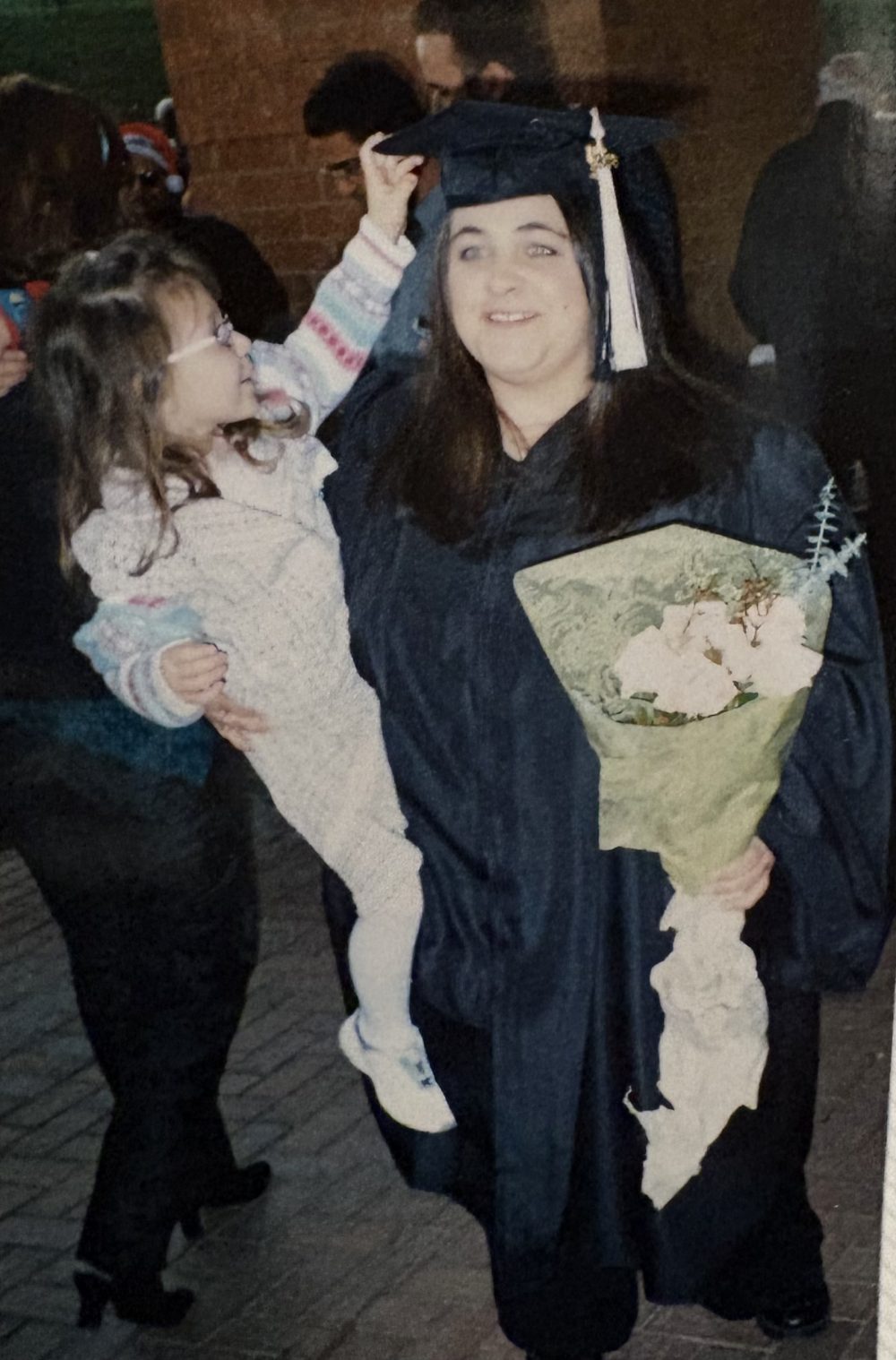
In 2004, Jennifer Merry graduated from UNC Charlotte with a B.M. in Music Education and a license to teach, and eventually became a band director, first at Kannapolis Middle and later at Hickory Ridge Middle.
That’s how most graduate profiles end, but for Merry, her bachelor’s degree was just the beginning of her Niner story. When her daughter was 20 and decided to transfer to UNC Charlotte, she felt it was time to take the next step and enrolled in the MSA program, with the goal of becoming an arts curriculum coordinator at the district level. “It was never really planned that way, but we became a UNC Charlotte family. We just had a great university in our backyard, so we stayed here.”
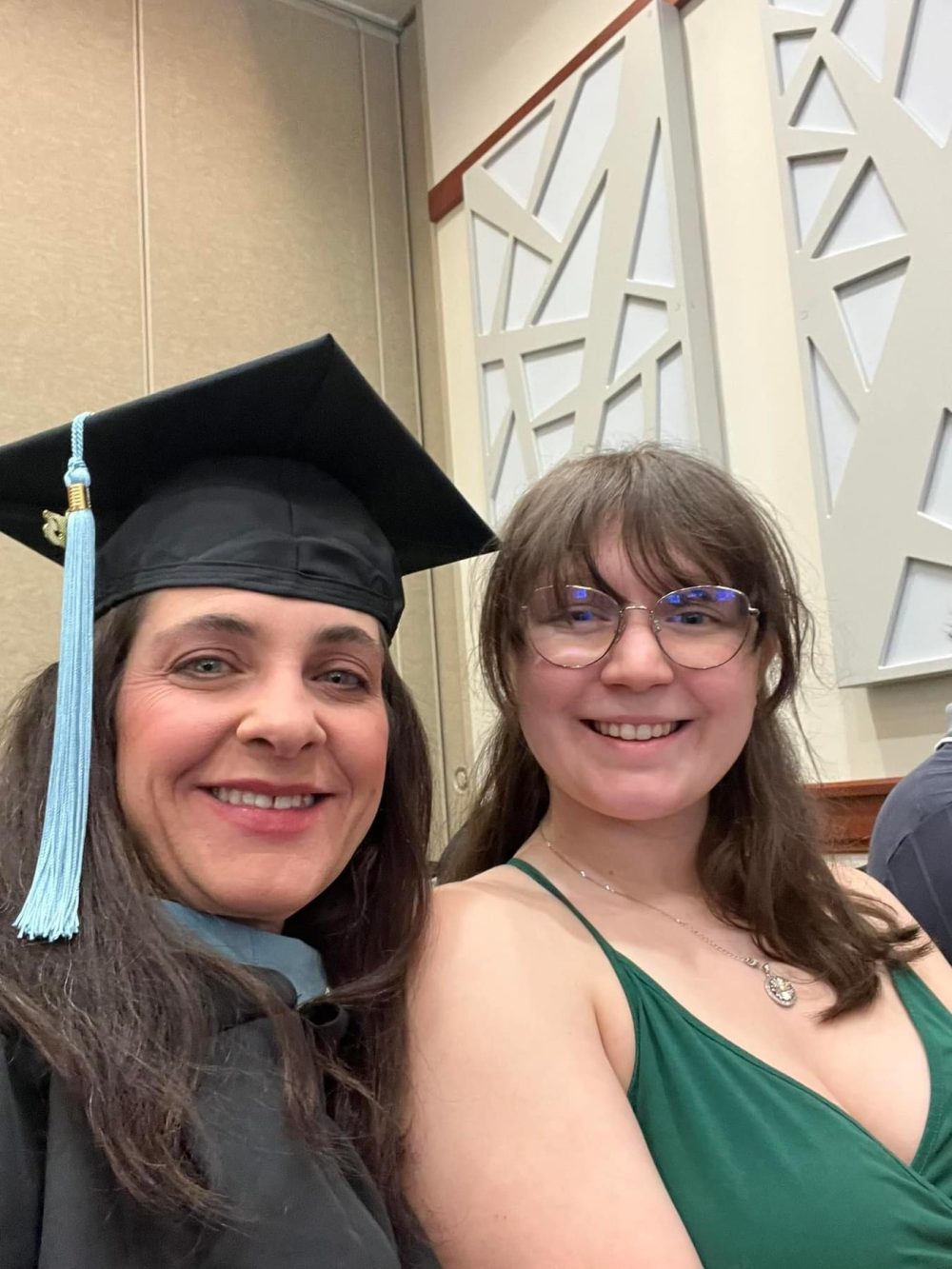
While enrolled in the MSA, Merry felt her path veering toward a different focus. “My mentors recommended the MSA rather than a masters in music because I wanted to work in a central office, and they recommend that you have your principal certification in case you move into other roles like superintendency, but I was always digging for the research behind the practice. I like to ask lots of questions!” she joked. She fell in love with the research process and connected with many professors who she was able to assist.
One of those professors was Rebecca Shore, whose background was in music education prior to focusing on principal preparation. She asked Merry as she approached her second graduation, “What’s next?” which spurred her to take the leap and apply for the Ph.D. program, joining the curriculum and educator development concentration to study the field of music education. Little did they know then, but Shore would play a key role in Merry’s continuing education journey.
A new opportunity
Around the same time, Cato College was chosen to become the home for the Mebane Early Literacy Center, the state’s most comprehensive center for early literacy research. As college leadership searched for a director to lead the center, Merry was hired as the administrative support associate to get logistics up and running. “It hurt my heart to leave the classroom, because I love my students, but I knew I couldn’t give them 100% of me while I was doing pursuing my Ph.D., and I also knew that I couldn’t put all of myself into my Ph.D. if I was still teaching full-time, too.”
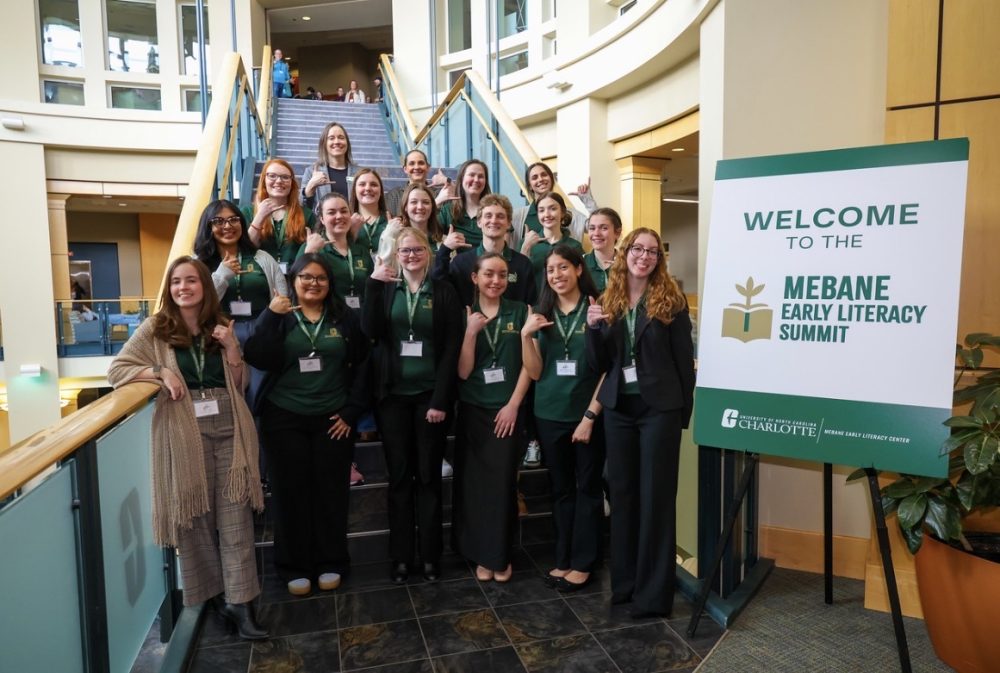
She jumped in immediately, helping to plan the first Mebane Early Literacy Summit and creating an intercurricular research presentation for the event. “It was my first real research presentation; we paired music and art with literacy and demonstrated how I used them together in my classroom. Even though my background is not literacy, research shows that teachers use concepts from other subject areas in their content all the time. It all interconnects — it’s really an educator’s superpower, to help students learn the things that are hard through the things that make them want to be at school.”
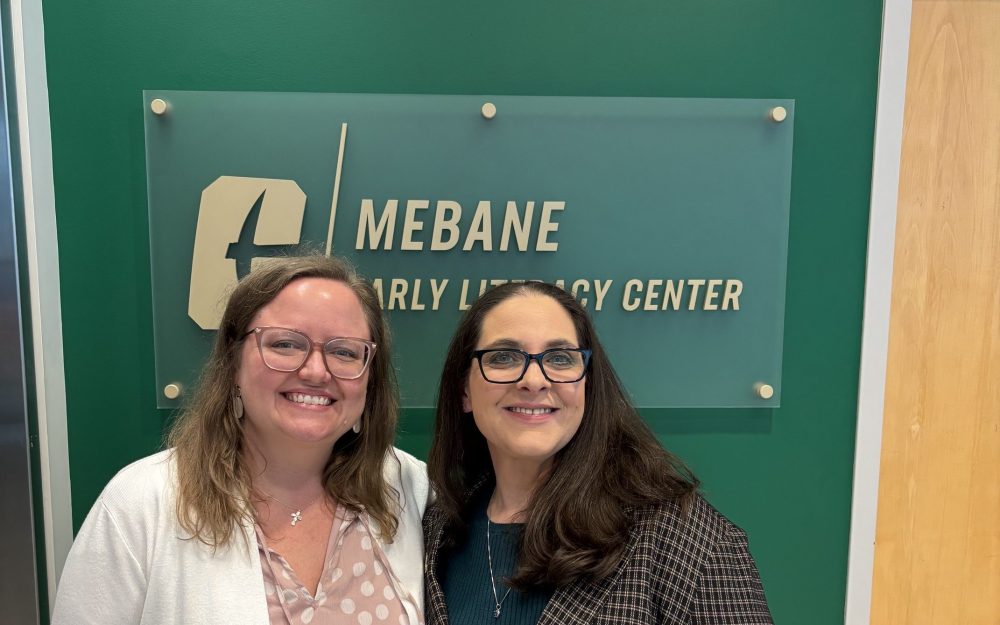
When director Angela Preston was hired the following year, she immediately recognized Merry’s talent and tenacity. “I learned quickly that Jenn knew everyone and everything,” Preston shared. “She was a huge asset to the center to already have someone established in the day-to-day, and who could orient me to the college and the University. Her role itself might be named ‘Administrative Support Associate,’ but from day one, I could already tell she was much more than what that role says on paper. She had already had this previous career as an educator, had come back to get her masters and interned as an assistant principal, so she came in with so many skills that it made it easy for me to immediately put our heads together on how we could best support the center and its goals.”
Preston likened it to having another graduate assistant assigned to the center, since Merry was already familiar with research practices and excited about the research agenda being pursued at MELC, but with more authority to take on administrative duties the center needed, like hiring for summer reading camp or managing event budgets.
More than her role on paper
The door for Merry to join center faculty in research opened with the Community Inquiry Study, an environmental scan of literacy resources in the Charlotte-Mecklenburg area available to community members, and a subsequent survey of those organizations to determine their size, scope, activity types, and operational needs. “She was already part of the team that was sourcing and aggregating that information, but when it came to the qualitative work around surveys and synthesizing the data, she was able to step right in and lend a hand,” Preston said. Merry was in the second year of her doctoral program by that point, so she was well-versed in discerning what literature would be appropriate and how best she could support the faculty leading the study. Her involvement has only grown since that first entry point, and she even accompanied REEL department chair Adriana Medina to a conference in Norway earlier this year to help present MELC research.
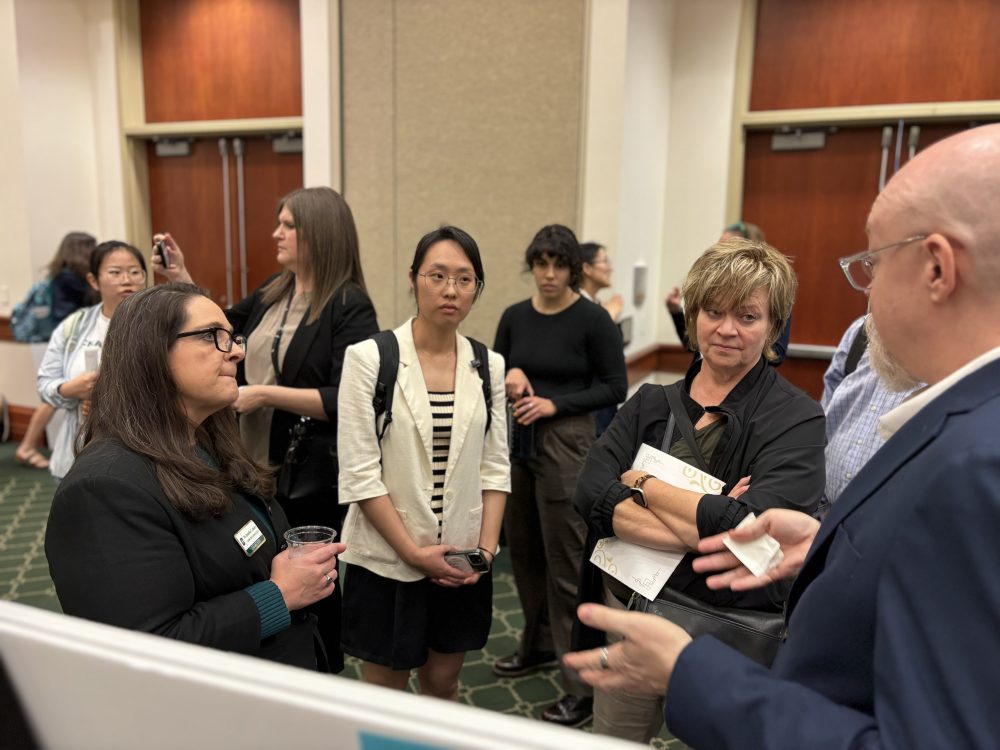
Preston also has capitalized on Merry’s experience as a band director who had to recruit students into her discipline. Preston saw how this could translate to recruiting college students into the Mebane Scholar program. One of the big initiatives she took on was our Partners in Reading job fair. “She designed a passport, so that students go to each table and meet each community partner offering summer opportunities, get a stamp from each table, and then return to us and can exchange their completed passport for swag,” Preston explained. That exposes the students to job opportunities, gives community partners access to student employees, and gives MELC their contact information to invite those students to future literacy-related events — a win for all parties involved. The idea was inspired by Merry’s band recruitment days, when she would have to encourage students to try all the different instruments rather than just give up after one.
The additional support outside of Merry’s job description didn’t stop at program development, either. Preston added, “With her qualitative research lens, she’s very good at measuring sentiment around certain issues, like in her dissertation with music educators, so she will be able to use those skills to help our team determine Mebane Scholar perceptions of the experiences we offer them in our program in our upcoming research. She’s also a wealth of historical knowledge, having seen the University grow and change over the years and been part of so many different facets of the college. She is the fabric of UNC Charlotte.”
Research to make a difference
As she approached her dissertation, Merry began to investigate many of the hurdles she and colleagues had encountered as music educators. The more she pieced together, the more she questioned how those hurdles were affecting teachers’ desire to stay in the profession at all. “I mapped out a visual representation of everything I wanted to do, but my professors told me that unless I wanted to do my dissertation for a year and a half or more, I needed to break it down. So Dr. Dika and Dr. Heafner helped me break it down into multiple parts, and then my dissertation committee and I together created a survey that asked all the questions I still wanted to investigate.”
Merry’s dissertation looked at the link between music educators’ self-efficacy, or their internal motivation to do good work, and their job satisfaction, essentially their desire to stay in the profession. She found that music educators often feel isolated, since they are often the only teacher of their type at their school, and have to find their own avenues for professional development, as most PD sessions held by their school or district often don’t apply or match well to their types of classrooms or subject matter. She also found encouraging responses that suggest when music teachers are matched with peers or mentors that are not necessarily fellow arts educators, but also teach electives or are the only teacher of their type in the school, they find value in those relationships, and both their self-efficacy and desire to stay increase.
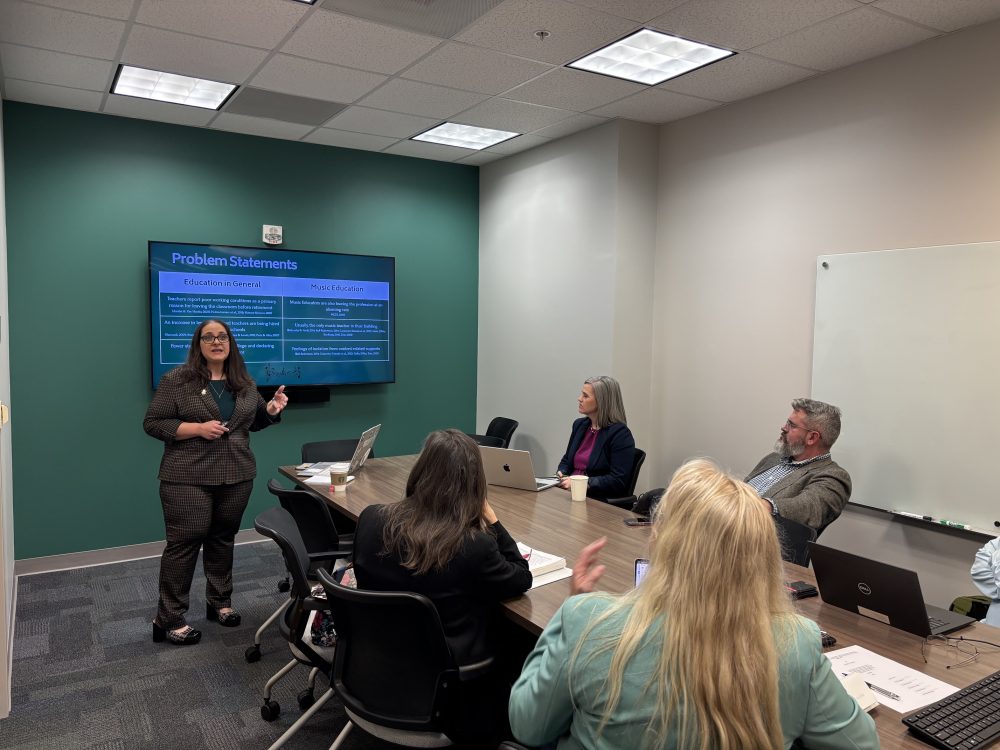
Merry hopes to make it into a multi-part study, as the initial survey she put together with her dissertation committee focused primarily on quantitative research methods. While she can draw some conclusions about why the data came out the way it did, she and committee member Rich Lambert hope to design a qualitative interview protocol based on the survey results in the future to dig into some of the stories behind the quantitative data. “I’d like to pinpoint down some recommendations of what we can do to advocate for arts educators and their self-efficacy, to reduce the strain that they feel.”
This research is personal for Merry. “Because I was a mentor teacher and trained as an administrator, I got to see both sides of the equation: it’s all types of teachers that are feeling this strain, but I wanted to target this to arts education because there are so few of us. I could collaborate with some of the other art teachers in the wing, but they’re not going through the same thing as me with auditioning ensembles and scheduling concerts and competitions. I worked a lot of weekends, and in spending time with colleagues across the district on these weekends, I was able to create my own makeshift professional learning community out of the other band directors who were competing in marching band or attending honor band rehearsal.”
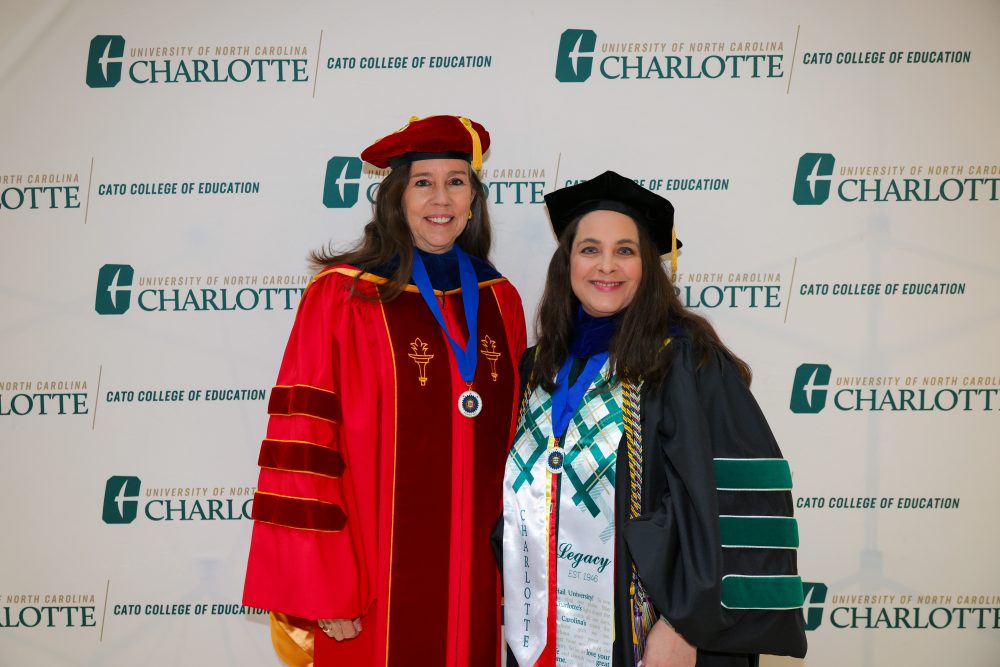
It was also personal for her dissertation committee. All five members of her committee are musicians themselves, and as Merry introduced them to the veritable crowd she drew for her defense, she added the instruments they played to their list of credentials. Tina Heafner, Merry’s advisor and co-chair, plays the flute; she was Merry’s greatest advocate and encouragement throughout her dissertation process. Shore, a trained vocalist and former choir teacher, co-chaired the committee — the last committee she will chair, as she is retiring this summer — and Merry called her her inspiration. “I want to be Rebecca Shore when I grow up!” she joked.
The road ahead
Merry is still on the hunt for her next role that befits a Ph.D. graduate, but is happy to stay at MELC as long as it makes sense. “I would love to continue what I’m doing and help grow all our programs. I feel very at home doing what I’m doing, because I love the organization, and I love coming up with creative solutions to the things we want to do… I want a chance to watch the plane fly that we’ve put together over the last two and a half years.”
When asked what her favorite part has been, the students were all Merry could talk about. “Our Mebane Scholars are the most amazing undergraduates I have ever worked with their inquisitive minds and quick thinking. I get to help them do research and learn some of the things that I’ve done as a Ph.D. student. I always ugly cry when they graduate, because I know they’re going off to their next adventure, and I don’t get to be a central part of that anymore, but I know that I’ve lit the way for them and that they’re going to be amazing educators. It’s incredibly rewarding.”
Preston believes the sky is the limit for her right-hand woman. “Of course, I hope she can continue with the Center as long as possible. But if she goes elsewhere, I genuinely hope that she goes somewhere that brings her joy and that sees the diverse strengths that she brings to her environment. I hope she’s able to take everything she’s learned here and in her past and bring it to a new space and that she’s recognized for what she can do. Most of all, I hope she’s able to keep helping others, because that’s part of who she is; she’s a helper. She loves students and mentoring, so I hope that she can find something that ‘Merrys’ them all together. She’s going to be incredible wherever she goes.”
Regardless of where her career next takes her, Merry is clear on her purpose. “We’re here to give quality support to these preservice teachers so that they go into the classroom and they succeed. And when they don’t know the answers, they know who to call or they know how to find it on their own.”