Alumni Q&A: Porscha Elton, Ed.D. ’23
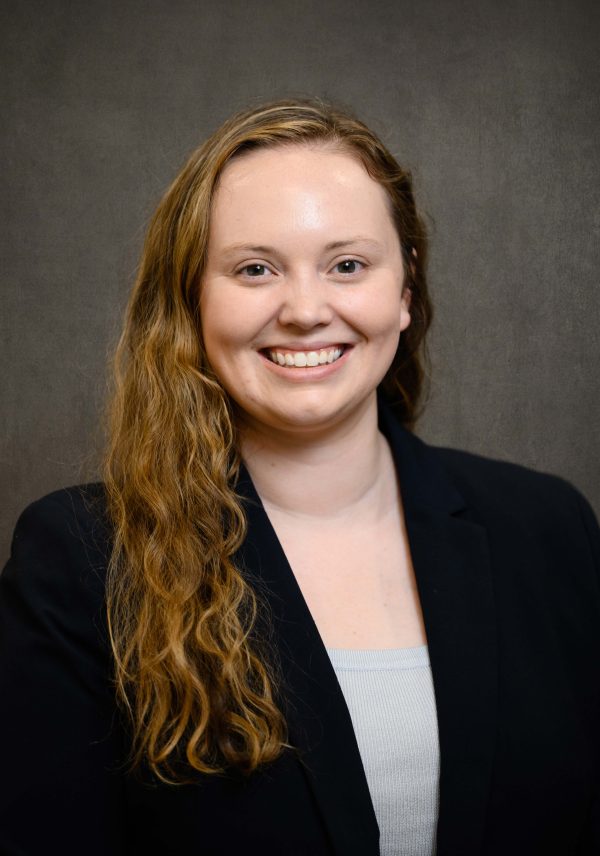
The following Q&A took place between 2025-2026 Ed.D. program graduate assistant Kailey Galloway and Ed.D. alumna Porscha Elton during the fall 2025 semester. Responses have been edited minimally to meet AP and University style guidelines.
KG: Can you describe your current role?
PE: I have been the executive director for presidential communications at Clemson University for the past 3.5 years. In this role, my team and I are responsible for the university president’s communications. What that really means is that no two days are the same, and we work in tandem with partners across the entire university. A good analogy is to think of this position like putting together a new puzzle every day — trying to gather all the details and information, synthesize everything, and then create something that is authentic, mission-driven and that elevates the Clemson brand.
KG: How has earning your doctorate influenced your career path?
PE: Earning a doctorate has influenced my career path in a few ways, but perhaps most importantly, earning this degree has solidified my belief that we are all part of something bigger than ourselves and that we are all capable of much more than we know. You will graduate knowing that you can conquer challenging things, you will have a cohort and peers who become lifelong friends and colleagues and you will be able to think even more critically. You will ask deeper and more meaningful questions, write in a specific academic way and hopefully graduate with excitement for what’s next and how you can continue to have a positive impact in the world.
KG: Can you share a professional accomplishment or initiative that you’re most proud of?
PE: I’ve worked at three universities in my career thus far, and there are things at every university and in each of my roles that I am very proud of, but in the end, it’s not about me. I hope that my work has positively impacted the lives of people I have had the opportunity to serve, and that I have continued to move forward the mission and vision of each area and university I have been a part of so far.
KG: What was the most impactful component of your doctoral program that helped shape you into the professional you are today?
PE: There were a lot of little components of my doctoral program that helped shape me into who I am today, and all of those little components combined created something truly impactful. If I had to boil it down, it would be the faculty and my peers. But digging a little deeper, certain moments stand out to me — a faculty member pushing me to think bigger, another faculty member teaching me how to craft my research question more precisely, peers who invited me out for a study break to dinner because sometimes we need to walk away, refuel and close the laptop. I think about my dissertation advisor spending countless hours reviewing my drafts and ensuring I was prepared to defend my dissertation. I think about the group text chains with classmates, the genuine encouragement we provided each other and the support we all received from our faculty. Each part of your doctoral program is meaningful and impactful, so try to be present and soak up every minute, even when you are bleary-eyed from working all day and pulling all-nighters to get your work done — remember this won’t last forever, and you will come out the other side.
KG: What aspects of your doctoral program (pathway) most prepared you for your current work?
PE: I have worked in higher education for nearly 10 years, and I was working full-time while I was in my doctoral program, so for me, the program wasn’t necessarily something that was preparing me to enter my profession. Still, the lessons that the program taught me — about perseverance, resilience, tenacity, community — those are things I carry with me every day in my work.
I also write all the time — easily hundreds (and hundreds) of pages a month in my job, so if nothing else, I have honed my writing skills to a science.
KG: What motivated you throughout your program at UNC Charlotte and continues to motivate you in your career?
PE: Several things motivated me during my time at UNC Charlotte and continue to motivate me in my career.
I knew from the time I was in kindergarten that I was going to be a “Dr.” I was a first-generation college student, and I had no clue what college meant when I was little, but I knew I was going, and I knew I was going to earn the highest degree I could. I keep a couple of photos in a notebook I carry with me — one is of me when I was that little girl in kindergarten, standing outside the single-wide trailer I grew up in with a big smile on my face, a Hello Kitty backpack, and a juicebox. The other photo is of my daughter, whom I had during my time in the doctoral program. You’ve heard of those notes you write to your future self, or wish you could have told your younger self — these photos serve that same role: a reminder of where I came from, a promise to keep chasing my dreams to make 5-year-old me proud, and to show my daughter that she can do anything she sets her mind to.
There is a teaching tool called Clifton Strengths that breaks down how you operate and engage with the world, and my number-one strength is that I am a learner — and that about sums me up. I am always excited to learn new things, grapple with challenging questions, and understand material. So throughout my program and daily life, that internal motivation of learning is always pushing me forward.
I don’t believe you ever really “arrive.” And maybe that goes back to my “Learner” strength, but I believe life is hopefully a journey and you are always working to get better and better and advance and positively impact the world around you more and more. But knowing I have the opportunity every day to learn more, make a difference in someone’s life, and give and be more motivates me.
KG: Can you provide insight on how to successfully transition from the doctoral program to working as a professional in your career?
PE: There wasn’t this big career transition for me, since I worked full-time throughout my entire program, but there was this weird sense that I wasn’t doing something right when I wasn’t in a formal program anymore. So I would say my advice or insight would be to give yourself grace and give yourself time. Once you graduate, that chapter of your life is over, which can feel weird, especially if you’ve been in that chapter for many years (or your whole life, like in my case). From the time I was in kindergarten, I was pursuing a degree: K-12, bachelor’s, master’s, doctorate — with no breaks. So when I was finally “finished,” I didn’t know how to feel. It was kind of like, ‘ok, what’s next?’ But there doesn’t always have to be a “next” — at least not right away, or even academically — and giving yourself grace to rest and figure out what is next in your life is super important.