Cato College adds seven new colleagues in key areas of expertise
Cato College welcomes six new faculty and one senior staff member for the new semester from all across the country, in fields like STEM education, play therapy, international education, addictions counseling, Board Certified Behavior Analyst training, higher education, assessment and accreditation and cultural competency in education. Their experience and accolades add to the prestige and practical knowledge students gain from being an EduNiner, whether undergraduate or graduate and across all disciplines.
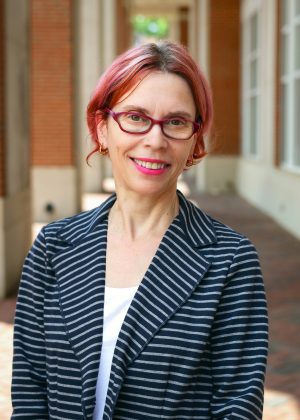
Corinne Brion
Associate Professor of K-12 Educational Leadership
Where do you call home?
Brion grew up on the Seine River in Vernon, a town in Normandy, France, and moved to Oregon to pursue higher education in 2007.
Where has your educational journey taken you prior to arriving here?
Brion did her undergraduate work in Paris before attending Southern Oregon University in Ashland, where she earned a master’s degree in education while also opening a Waldorf-inspired school in June of 2007, the Madrone Trail Public Charter School. She loved the Waldorf concept of educating the whole child, heads, hands, and heart. “That taught me a lot about the importance of beauty in and around the classroom,” she said, “making the school intentionally inviting. Waldorf is a beautiful approach recognizing the child’s development rhythm and respecting it without pushing it.” As school principal, Brion raised over $60,000 annually for the school’s operation, in addition to typical administrative and oversight capacities.
In August of 2010, Brion became the Director of International Programs at St. Mary’s School of Medford. There she developed and managed a high school international boarding program and coordinated foreign students’ placement and curricula. After two years there, she decided to pursue her Ph.D. at the University of San Diego. She first enrolled at San Diego in 2012, taking a few classes under a special student provision, and began working as a French teacher. The next year, she was accepted into the doctoral program in education leadership with a specialization in PK-12 education.
It wasn’t long before she was intensely involved, working as an adjunct professor and as a graduate assistant as well as doing consulting work for Opportunity International, BuildOn and Edify — all education-focused companies offering development pathways for teachers and administrators. Through Edify, she provided leadership training to head teachers and school administrators in West Africa, implementing a “Train-the Trainers” model. Brion’s work has taken her to Burkina Faso, Ghana, Liberia, Rwanda and Ethiopia.
After completing her Ph.D., Brion conducted independent studies, which brought her to Africa for months at a time, and she first met her future husband in Ghana. In May of 2017, Corinne proudly accepted the William Foster Outstanding Dissertation Award for her thesis. More recently, she finished her first book on global moral leadership in schools and was awarded a Fulbright Scholar Fellowship in Madagascar to start in 2027.
What would you call your proudest professional or personal accomplishments?
Brion is quite proud of the work she did educating educational leaders in Africa. As part of that work, she evaluated the influence of technology to enhance learning, the need for bilingual instruction, cultural background sensitivity and many other factors, but she discovered that perhaps the most essential measure is to train school leaders who control the budget because they hire better teachers, materials, provide teachers with professional development, “and they have the money to spend on better toilets!” Something so basic can disrupt even the best practices because diseases often circulate through toilets, and older girls often drop out simply because of an absence of toilets or lack of privacy around them.
She likes to quote a World Bank spokesman who discovered that “educating girls may be the investment for developing countries with the highest return.” When girls are educated, a community’s economy grows, and mortality rates for mothers and children drop. Child marriages occur less frequently, families are smaller, and better hygiene reduces disease. With this shift, women assume a greater leadership role, and all
children are healthier and better educated.
Brion also founded a nonprofit called Turtle Up, which empowers communities through cross-cultural environmental education and marine conservation. By establishing plastic buy-back and upcycling centers in Ghana, Turtle Up safeguards sea turtle habitats, generates fair-wage jobs, and drives a localized circular economy that turns waste into opportunity.
What are your top research interests? Do you have any ongoing grants, fellowships or other funded projects that you’ll bring with you to Charlotte?
Brion focuses on student and adult development, professional development and professional learning, learning transfer, third spaces and women and girl’s empowerment. The frameworks for her research are cultural proficiency and the Sustainable Development Goals (SDGs). She will head to Madagascar in the spring to complete her Fulbright Scholar Fellowship, awarded earlier this year.
What are you most looking forward to when you arrive on campus?
“I’m looking forward to collaborating and learning with and from my new UNC colleagues and students.” She is also excited to explore the great state of North Carolina.
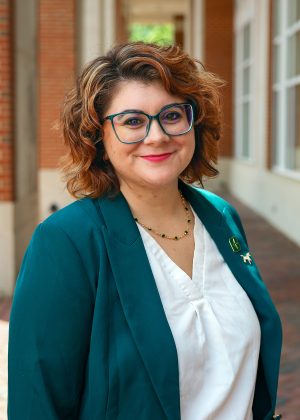
Amanda DeDiego
Associate Professor of Counseling
Where do you call home?
“North Carolina with be the fifth state I have called home. I was born in Florida, Atlanta raised me, and Wyoming has been home for the last ten years. Charlotte is the next chapter, which puts me back within driving distance of my family, including a niece and nephew who are growing alarmingly fast!”
Where has your educational journey taken you prior to arriving here?
DeDiego earned both a bachelor’s in Psychology and a master’s in Community Counseling at the University of North Georgia, followed by a Ph.D. in Counselor Education at the University of Tennessee. “I am currently finishing a graduate certificate in public health at the University of Wyoming. I love to learn, so who knows what may come next?”
As a practicing mental health counselor for nearly fifteen years, professional development informs her work as much as formal education. She is a trauma specialist with training in EMDR, ketamine-assisted psychotherapy and auricular acupuncture.
Why did you choose Charlotte?
“Honestly, Charlotte felt like a unicorn of an opportunity. An R1 research environment, a program whose values match my own, colleagues I already trust, and close enough to Atlanta that my family is a drive rather than a full day on planes. Charlotte feels like a natural fit for the next phase of my career.”
What would you call your proudest professional accomplishments? How about personal?
Professionally, impact means the most to DeDiego.
- She spent the last two years on the Governing Council of the American Counseling Association, where she helped build an entirely new governance structure for an organization nearly 75 years old with about 60,000 members.
- “I helped write legislation that became law in Wyoming establishing payer parity for telehealth services, among the first of such laws in the country after COVID.”
- She has a textbook coming out with Routledge in 2027, a guide for practitioners and educators who want to push back on the systems that limit access to mental health care, which, in her words, “feels like the culmination of the last decade of my work.”
- For the last year, she served as the Dean of the University of Wyoming branch campus in Casper, Wyoming.
Personally, she has a wide range of interests that bring her a sense of joy and accomplishment.
- “I am a genuinely good cross stitcher. I pick challenging things to design and then give the finished piece away, most recently a Monster energy drink can for my gym buddy before I left Wyoming.”
- She has completed six half marathons. “I am not a fast runner, but I finish and that is what counts. I hope to someday run the Hobbiton half marathon in New Zealand running through the Lord of the Rings sets.”
- “I am able to recite the movie Titanic from beginning to end.”
What are your top research interests? Do you have any ongoing grants, fellowships or other funded projects that you’ll bring with you to Charlotte?
DeDiego’s research agenda centers on innovation and advocacy. She describes her research under three umbrellas:
- understanding the needs and barriers to healthcare access faced by underserved communities
- innovative and creative training strategies for professional counselors to address these needs
- engaging in systemic advocacy to address health disparities
She also has some related research projects and grants that are continuing in her role at Charlotte. The first partners with public libraries and senior centers to build public access telehealth spaces, called PATHS, so that rural and underserved communities have a reliable place to connect with mental health care and recovery support.
The second involves custom coding immersive VR training that teaches health professionals to recognize and respond to indicators of suicide risk in vulnerable populations, built in partnership with the University of Utah. This project has expanded to include some community colleges and school districts in North Carolina this year.
The third built a model for integrating AmeriCorps into clinical training programs so that internships at low-resource schools and practices are supported through funded internships through federal service programs.
What do you want students to know about you before they sit down in your class?
“I have been seeing clients consistently for almost 15 years and still own a practice where I work with complex trauma, so my goal is that what I teach accurately reflects real-life practice.”
“My faculty office has a coffee bar and a hammock chair, and they are there to be used! The questions students bring about practice, research, and advocacy are the best part of my week. I really love to work with students on research that has community impact and mentor the next generation of innovators.”
What do you want colleagues to know before they first shake your hand?
“Mental health counselors do not work in isolation, and very little of my work is in counseling alone. My projects have put me in collaboration with software developers, public health researchers, librarians, farmers, nurses, state agencies and K-12 teachers. Each of those partnerships made the work better than it would have been. So if our research connects, even loosely, let’s have coffee and chat about it. The work and the community impact of the work are stronger with more voices involved. Dissemination is just as much about supporting and improving community resources as peer-review publications.”
What are you most looking forward to when you arrive on campus?
DeDiego says she is eager to learn the community and figure out how to meaningfully contribute to Charlotte as a researcher, scholar, and practitioner. “That takes time and a lot of listening, and I can’t wait to get started.”
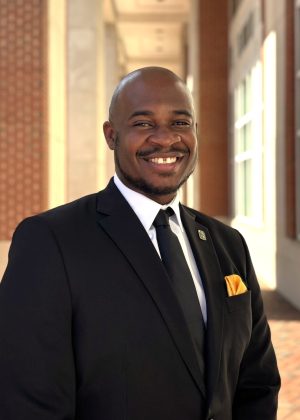
Jesse Ford
Associate Professor of Higher Education
Where do you call home?
“I grew up on a farm in a small town called Latta, South Carolina. It is located in Dillon County, about 20 miles outside of Florence and approximately one hour from Myrtle Beach.”
Where has your educational journey taken you prior to arriving here?
Ford’s path has taken him through several institutions across the Southeast. He earned a bachelor’s degree in history from Coastal Carolina University, a master’s degree in higher education and student affairs from the University of South Carolina and a Ph.D. in higher education from
Florida State University.
He also worked in multicultural student affairs at the University of Miami and, most recently, served as an assistant professor and later associate professor of higher education at UNC Greensboro.
Why did you choose Charlotte?
“I chose Charlotte because of its reputation and the love students have for the institution. I was also drawn to Charlotte’s momentum as a growing research institution and the opportunity to collaborate with colleagues who care about educational transformation. I see Charlotte as a place where I can grow as a scholar, teacher, mentor and leader while contributing to the work already happening here.”
What would you call your proudest professional accomplishments? How about personal?
Professional
- Earning tenure and promotion to associate professor within five years
- “Creating a research-based campus initiative rooted in my scholarship to improve the experiences of Black undergraduate and doctoral students”
- Being recognized as an Emerging Scholar by both Diverse: Issues in Higher Education and ACPA
Personal
- Being a husband and father
- The garden he’s built in his backyard
- “Purchasing my mom a brand new car after graduation”
What are your top research interests? Do you have any ongoing grants, fellowships or other funded projects that you’ll bring with you to Charlotte?
“My program of research examines the historical and sociocultural experiences of Black students and scholars, with particular attention to Black men across educational spaces.”
Ford’s primary research interests include:
- Doctoral education and graduate student socialization
- The experiences of Black men in higher education
- Academic advising, leadership education and student success strategies
Ford is currently wrapping up two funded projects. One examines the experiences of Black doctoral students and racial battle fatigue in higher education doctoral programs. The other explores the experiences of Black men enrolled in higher education doctoral programs while also working full-time in higher education.
What do you want students to know about you before they sit down in your class?
“My classes are intellectually rigorous, but they are designed to help students become more confident writers, thinkers and professionals. I want students to understand not only what they are learning, but also why it matters and how it connects to their future goals. I value curiosity, honesty and preparation.”
What do you want colleagues to know before they first shake your hand?
“I want colleagues to know that I value collaboration, authenticity and meaningful relationships. I take my work seriously, but I believe good work happens alongside laughter, a cup of coffee and a genuine willingness to learn from others.”
What are you most looking forward to when you arrive on campus?
“The people. More than anything, I am looking forward to building relationships with students and colleagues. I am excited to teach, mentor and contribute to the work already happening on campus.”
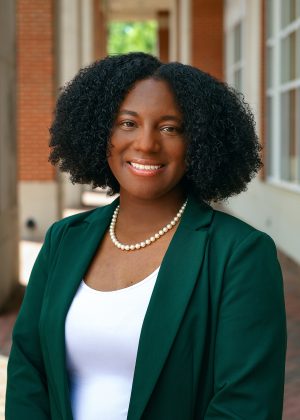
Whitney MCCOY Hudson
Assistant Professor of Elementary Education
Where do you call home?
McCoy Hudson was born in Asheville and raised in High Point, N.C. “While I have been fortunate to live in many places in North Carolina including Charlotte, Winston-Salem and Raleigh, home will always be High Point because of all the memories I have there.”
Where has your educational journey taken you prior to arriving here?
McCoy Hudson began her collegiate education at Winston-Salem State University, where she earned a bachelor’s degree in biology, served as Student Government Association President and was initiated into Alpha Kappa Alpha Sorority, Inc.
She then earned a Master of Arts in Teaching from UNC Charlotte and taught in Charlotte-Mecklenburg and Guilford County Schools for six years at the elementary and middle school levels. Afterward, she completed my Ph.D. in Teacher Education and Learning Sciences, with a concentration in educational psychology, at NC State University, followed by a postdoc at the University of Virginia.
Most recently, she served as a Research Scientist at Duke University’s Center for Child and Family Policy, where she conducted community-engaged educational research focused on improving opportunities for children, youth and families. She shared, “I am very thankful for my educational journey because it has provided me with many opportunities. Each of these experiences has shaped my commitment to education and continues to inspire my work as a scholar, educator and community-engaged researcher.”
Why did you choose Charlotte?
“I chose UNC Charlotte because the faculty, staff and students made me feel welcomed. I felt like I could authentically be myself. They were genuinely committed to education in many facets, from preparing outstanding educators to advancing applied research, community outreach and innovation. That dedication closely aligns with my own scholarship and values.”
What would you call your proudest professional accomplishments? How about personal?
Professional
- Developing and securing funding for InventSTEM, a community-engaged STEM research initiative that creates accessible, hands-on STEM experiences for youth and families and demonstrates how mentoring and family engagement foster STEM engagement and belonging.
- Teaching and mentoring students who are motivated and inspired to create meaningful change, as some have gone on to become beginning teachers of the year, created STEM programs for youth and earned outstanding service awards
- Earning the 2026 NAEd/Spencer Postdoctoral Fellowship
Personal
- Becoming the first person in her family to earn a Ph.D.
- “Thriving personally and professionally after the unexpected loss of my father in 2005. His example, together with my mother’s love and support, instilled in me the resilience and perseverance that have shaped who I am today and continue to guide me in every aspect of my life.”
- Building a life centered on service, mentorship, and giving back to the communities that have invested in her through her career. “I am forever grateful to my experiences at Winston-Salem State University for instilling these values in me: ‘Enter to Learn, Depart to Serve’.”
What are your top research interests?
“As a community-engaged scholar, my research examines how we can use asset-based frameworks to cultivate welcoming learning environments that center the voices and knowledge of youth, families and communities.”
Her interests include:
- identity, belonging and well-being in educational environments
- community-engaged and participatory research partnerships
- accessible literacy and STEM education
- critical innovative research methodologies
Do you have any ongoing grants, fellowships or other funded projects that you’ll bring with you to Charlotte?
McCoy Hudson is a 2026 National Academy of Education/Spencer Foundation Postdoctoral Fellowship recipient, which supports her research on how community-based STEM counterspaces foster Black girls’ technological agency and future STEM pathways. In her own words, “It’s an honor to be in community with scholars committed to education.”
What do you want students to know about you before they sit down in your class?
“I want my students to know that classrooms are collaborative spaces where curiosity, questioning and various perspectives are valued. Through class engagement they should feel empowered to make meaningful contributions to educational spaces and the greater community.”
What do you want colleagues to know before they first shake your hand?
“I thrive off of interdisciplinary partnerships with colleagues. Co-creating and combining our expertise is necessary to address complex educational challenges in our society.”
What are you most looking forward to when you arrive on campus?
“A lot has changed since I graduated, so I am looking forward to building new relationships and exploring the growing campus.”
Melissa McCullough
Director of Assessment and Accreditation
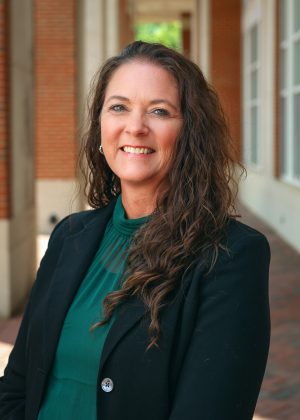
Where do you call home?
“Home is wherever my children and husband are. Physically, as of this summer, my home is Concord, North Carolina, but Michigan will always feel like home as well since I was born and raised there.”
Where has your educational journey taken you prior to arriving here?
McCullough earned her bachelor’s degree and first master’s degree from Grand Valley State University, where she focused on Social Studies Education and Middle/High School Education. She later completed an Ed.D. in Educational Leadership from Cumberland University and, most recently, earned a master’s degree in History Education from UNC Wilmington in the summer of 2026.
Before joining UNC Charlotte, she spent four years at Lees-McRae College as the Director of the Master of Arts in Teaching and Elementary Education programs while also serving as a full-time faculty member. Prior to higher education, she spent 22 years teaching high school social studies in Michigan and North Carolina, experiences that continue to shape her work in educator preparation and assessment.
Why did you choose Charlotte?
“I saw UNC Charlotte as an opportunity for continued professional growth in educational leadership and assessment. During my four years at Lees-McRae, I became deeply involved in assessment and accreditation work and discovered how much I enjoy using data and evidence to support program improvement and student success. Charlotte also holds a special place in my heart because both of my children live in the area, making this move both professionally and personally meaningful.”
What would you call your proudest professional accomplishments? How about personal?
McCullough shared that her proudest accomplishments in both arenas are closely connected, as education has always been both her profession and passion.
- “Earning my doctorate in Educational Leadership was the fulfillment of a goal I had set for myself early in my teaching career. Completing the degree represented years of hard work and reinforced my commitment to lifelong learning.”
- “The impact I have had on students and athletes over more than 26 years in education and over 20 years as a coach. While awards and titles are meaningful, nothing compares to hearing from former students and athletes and seeing the successes they have achieved in their careers, families, and communities. Knowing I played a small role in their journeys is incredibly rewarding.”
- Helping prepare and mentor future educators: “Whether teaching in K–12 schools, serving as a faculty member, directing educator preparation programs or working in assessment and accreditation, I have valued the opportunity to support the next generation of teachers and education leaders.”
- “On a personal level, I am most proud of my family and the example I have been able to set for my children. I have always wanted them to see the importance of education, perseverance and continuing to pursue new goals and opportunities throughout life.”
What are your top research interests?
McCullough’s interests center around educational assessment, educator preparation, literacy education and instructional practices in social studies.
“Throughout my career, I have been passionate about promoting literacy across the curriculum and have led workshops at the school, district, state and national levels focused on incorporating reading and literacy strategies into social studies and other content areas. I also have a strong interest in political history, which inspired me to return to graduate school and earn a second master’s degree in History Education.”
More recently, her work has focused on assessment measures and accreditation processes that support continuous improvement in educator preparation programs.
What do you want students to know about you before they meet you?
“While my role at UNC Charlotte will not involve teaching, former students would likely say that I am supportive, passionate about education (and history) and committed to helping others succeed. I believe in setting high expectations, providing honest feedback and building relationships that encourage growth and confidence.”
What do you want colleagues to know before they first shake your hand?
“I am a collaborative team player with a historian’s mindset — I naturally gravitate toward claims, evidence and reasoning when approaching challenges and decisions. I value clear communication, integrity and strong professional relationships, and I believe it is important to find joy and purpose in the work we do every day.”
What are you most looking forward to when you arrive on campus?
“I am excited to work alongside the outstanding faculty and staff in the Cato College of Education, build new professional relationships and contribute to the college’s continued impact on preparing and supporting future educators. I’m especially looking forward to learning from my colleagues and helping advance the important work being done across the college.”
Guofeng Shen
Clinical Assistant Professor of
Special Education
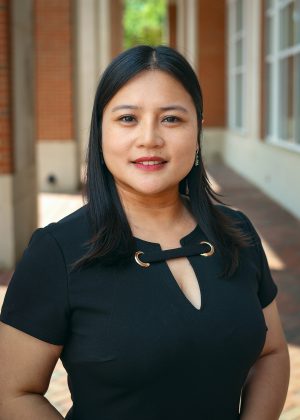
Where do you call home?
“Home has meant different places at different stages of my life. I was born and raised in China, where my passion for education first began. More than a decade ago, I moved to the United States to pursue graduate education, never imagining that the journey would lead me to become a special educator, behavior analyst, researcher, business owner and now a faculty member. Colorado has been home for the past decades, where I completed my Ph.D. and built my professional career. Today, I’m excited to begin a new chapter in Charlotte and become part of the UNC Charlotte community.”
Where has your educational journey taken you prior to arriving here?
Shen’s educational journey has crossed continents and disciplines. After beginning her studies in China, she came to the United States to pursue graduate training in special education and applied behavior analysis. Along the way, she earned her board certified behavior analyst-doctoral (BCBA-D) and recently completed a Ph.D. in Special Education with an emphasis in applied behavior analysis. Shen shared, “My dissertation examined culturally responsive functional communication training for Asian immigrant families, reflecting my passion for ensuring that evidence-based practices are meaningful and accessible across cultures.”
While completing her doctoral training, Shen balanced multiple professional roles that shaped her perspective as both a scholar and practitioner. She worked as a special education teacher in public schools, progressed from behavior technician to board certified behavior analyst (BCBA) providing clinical services and supervision, taught university courses, published journal articles, co-edited books and founded Lotus Bloom ABA. “These diverse experiences reinforced my belief that the most impactful research is grounded in the everyday realities of classrooms, clinics, and the families we serve,” she said.
Why did you choose Charlotte?
“UNC Charlotte immediately stood out because of its commitment to excellence in teaching, meaningful community partnerships, and serving a diverse student population. During my campus visit, I was struck by how welcoming and collaborative everyone was. I wanted to join a department where I could continue growing as an educator while contributing my experiences as both a practitioner and researcher.”
“Charlotte itself was equally appealing. As one of the fastest growing and most diverse cities in the country, it offers tremendous opportunities to collaborate with schools, families, and community organizations. I look forward to building partnerships that connect research with practice and ultimately improve outcomes for children with disabilities.”
What would you call your proudest professional accomplishments? How about personal?
“Professionally, completing my Ph.D. is certainly one of my proudest accomplishments, not simply because of the degree itself, but because of the journey it represents. Another is earning my BCBA-D, which reflects years of clinical practice, supervision and professional development. Finally, founding Lotus Bloom ABA has allowed me to translate research into direct services that support children and families in meaningful ways.”
“Personally, I am proud of building a life in a new country. Moving from China to the United States meant adapting to a new language, culture and educational system while pursuing ambitious professional goals. That experience has shaped how I approach teaching, mentorship, and collaboration—with empathy, persistence, and appreciation for diverse perspectives.”
What are your top research interests?
Shen’s research focuses on:
- culturally responsive practices in special education and applied behavior analysis
- family-professional partnerships, caregiver training and coaching
- functional communication training
- preparing future educators and behavior analysts to work effectively with culturally and linguistically diverse populations
“Much of my work is motivated by a simple question: How can we ensure that evidence-based practices remain effective while also respecting the cultural values and lived experiences of the families we serve? As someone who has personally navigated multiple cultures, this question is both professionally and personally meaningful.”
What do you want students to know about you before they sit down in your class?
“I want students to know that I was once sitting exactly where they are. Every role I’ve held — as a classroom teacher, behavior technician, BCBA, doctoral student, business owner and professor — has taught me something valuable about supporting individuals with disabilities and the professionals who serve them.”
“My classroom emphasizes curiosity, critical thinking and practical application. I enjoy connecting research to authentic challenges that students will encounter in schools, clinics and communities. I also believe that learning is most effective when students feel comfortable asking questions, sharing different perspectives and learning from one another.”
What do you want colleagues to know before they first shake your hand?
“I value collaboration, humility and continuous learning. My professional path has taken me through public schools, clinical practice, higher education and entrepreneurship, giving me opportunities to work alongside educators, therapists, families and researchers. Those experiences have taught me that the most meaningful work happens when people with different expertise come together around a shared purpose. I am always eager to learn from colleagues, share ideas and contribute wherever I can.”
What are you most looking forward to when you arrive on campus?
“More than anything, I’m looking forward to building relationships with students, colleagues, local schools, and community partners. As both an educator and a behavior analyst, I believe universities have a unique opportunity to bridge research and practice. I’m excited to help prepare the next generation of special educators and behavior analysts while contributing to the collaborative and innovative culture that makes UNC Charlotte such a special place.”
Ivana Stoilovic
Visiting Assistant Professor
of Play Therapy
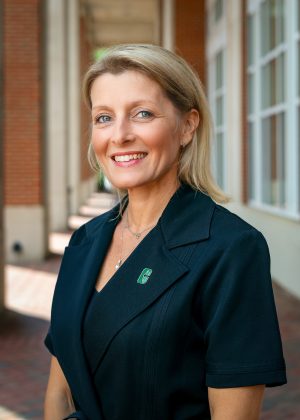
Where do you call home?
Stoilovic originally hails from Serbia.
Where has your educational journey taken you prior to arriving here?
“I have been privileged to study and work in different countries. I have studied in Serbia, Chicago and Athens, Greece.”
Why did you choose Charlotte?
The counseling department’s specialization in the field of play therapy was her biggest draw to Charlotte.
What would you call your three proudest professional accomplishments?
- “One of my greatest professional accomplishments has been helping prepare future counselors and play therapists. Whether through teaching, supervision, curriculum development or mentoring. I have been passionate about supporting students with the knowledge, skills and confidence to provide developmentally responsive, evidence-based care to children and families.”
- Supporting children and families through clinical practice: “My clinical work with children, adolescents and families has been one of the most meaningful aspects of my career. Supporting children as they navigate adversity, helping caregivers strengthen their relationships with their children and witnessing healing through play continue to inspire my work as both a clinician and educator.”
- Building and growing the play therapy profession: “I am proud to contribute to the growth of the play therapy profession through leadership, collaboration, advocacy and professional service.”
How about personal?
“I am married to a wonderful man who is my husband and also my best friend and partner in every aspect of life. I am the proud mom of an inquisitive young woman who reminds me daily of the importance of listening, being present and embracing children’s natural curiosity. Also, I am a proud mom of two wonderful furry daughters (our beloved dogs). I am also a daughter, a sister and a friend—roles that continually remind me of the importance of nurturing meaningful relationships. These connections are my greatest source of strength, motivation and joy. They reinforce my belief that attunement, genuine connection and validation have the power to help people feel seen, understood and supported. Those same principles are at the heart of play therapy and guide both my personal life and my work with children, families and students.”
What are your top research interests?
- Play therapy outcomes and mechanisms of change
- Parent-child relationship and caregiver involvement in play therapy
- Cross-cultural applications of play therapy and counselor education
What do you want students to know about you before they sit down in your class?
“I value authenticity, professionalism, and lifelong learning. I don’t expect anyone to know everything when they walk into class—that’s why we’re here. I do hope you’ll come prepared to engage, reflect, practice and support one another as we grow together.”
What do you want colleagues to know before they first shake your hand?
“Before we first shake hands, I hope you’ll know that I value relationships and believe that the best work happens when people collaborate with trust, respect and a shared sense of purpose.”
What are you most looking forward to when you arrive on campus?
“Most of all, I hope you’ll know that I’m excited to be here, eager to learn from each of you and looking forward to building meaningful collaborations together.”