Filling a gap in the literature: Amy Work, Ph.D. ’26, aims to standardize parental consultation competencies in play therapy
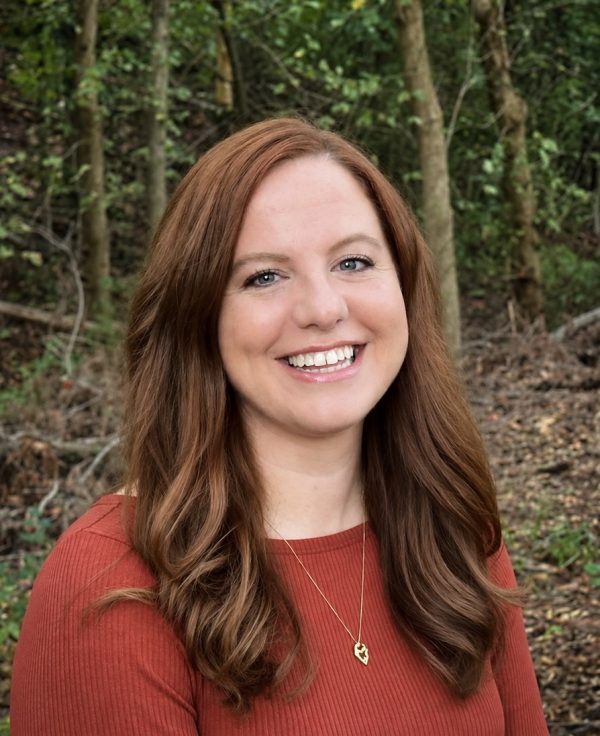
Amy Work had always dreamed of getting a doctorate one day, but her path to the Ph.D. in Counselor Education and Supervision was not exactly a predictable one. As a classroom teacher for four years, she saw firsthand the mental health challenges facing students in her class and wanted to find a more specific and direct way to help, so she sought a masters in counseling. While she went into private practice for several years and helped clients, she found that she missed teaching more and more. She concluded that the logical choice was to pursue a Ph.D. that would equip her to teach counselors, and one day prepare them to meet the same challenges she had encountered.
UNCOVERING THE GAP IN TREATMENT
In her private practice, she began to hear from play therapy clients that parental consultation, which is commonly taught but has no standard competencies under CACREP or other counseling governing bodies, was sometimes not occurring with other play therapists that they had seen. “It’s considered best practice,” Work said, “to meet with the child weekly, and then every 3-5 sessions, the therapist should meet with the parent separately. This gives therapists the chance to share what’s going on in the playroom, parents can share what’s happening at home, and then you can collaborate on goals and treatment plans. It’s also a chance to provide some education to the parent about the process, as well as ways they can support the work in therapy at home, and find out how you can support them as well.”
The more she looked around, the more Work found that many of her colleagues in the industry were skipping this portion entirely. “They get into the field to work with kids, not adults, so they meet with the children every week, but some are never meeting with the parents at all. Those that are meeting with parents have had to figure out how to do it themselves, because there hasn’t been a lot of training or education about how to do this part of the job effectively.” This becomes a problem in treatment for many reasons, Work elaborated, but the largest one is that children often have the least power in the systems they’re a part of, especially families and school systems. “If you want to affect positive change as a therapist, you have to work with the system as well as the child.”
It became a real passion for Work in her studies, and in her research internship course, with support from both faculty and a fellow student, she designed her own qualitative study to uncover what play therapists are currently doing around parental consultation and what their experiences in implementing those practices has been.
The study identified a few central themes around what practices were participants already implementing: using parental consultation as an orientation to play therapy itself; as a way to more thoroughly assess the child, the family, and overall needs that need meeting; as an education opportunity for parents on what’s developmentally appropriate for their child or how to support their child at home; and as a bridge-builder between therapist and parent to create positive relationships where the parent feels supported and heard.
Work joked that it could have been two studies, as the team also pulled out several central themes for the question of experiences around parental consultation. Most therapists using parental consultation had sought some kind of outside professional development to educate them around the topic, despite the majority of participants being Registered Play Therapists and two being RPT supervisors. More importantly, though, they shared that doing parental consultation had strengthened the therapeutic alliance between therapist and family, and it allowed more free information sharing between parties to give context to what’s happening with the child both in the playroom and at home. And perhaps most importantly, all participants reported increased positive behavioral change in child clients when parental consultation was implemented; however, they all also reported having significant barriers to implementation, including logistics, scheduling, parental resistance, financial constraints, challenging family dynamics and more.
Along with the team from her research internship, Work took these findings and developed an article to submit for publication. Even now she can hardly believe that in April, she became a published first author in the International Journal of Play Therapy with that article, a full six months before she defends her dissertation.
A NEW DIRECTION FOR HER DISSERTATION
One of the issues Work uncovered in that study was that her participants, who are practicing play therapists who engage in some form of parental consultation, all said that they had to figure out how to do those consultations on their own. Work’s theory on why this is is simple: “I think the reason that graduate school doesn’t prepare us for this and we don’t receive training around it is because there are not standard competencies for it.” These standard competencies are typically developed by CACREP, the accrediting body for higher education programs for counseling, or APT, the professional association for play therapists. “CACREP actually doesn’t include play therapy, so APT created their own. Even so, only one of the 29 competencies includes anything about parental consultation, and it doesn’t give any guidance on how to do it or what should be included.”
With that in mind, Work took a step away from the fact-finding quantitative study she had planned to take on after her qualitative study in the research internship and took aim at standards instead. In her dissertation, her goal is to take the findings from the qualitative study about practices currently being conducted and how therapists’ experiences with those practices have been, and use them to create a list of competencies that define parental consultation in play therapy. “Instead of therapists questioning what parental consultation is and how to do it well, we would actually have a list of the knowledge that’s required, the dispositions required, and the skills required to conduct effective parent work.”
Defining a concept that has never been defined before sounds like a daunting task, but with some help from methodologists in the college faculty, Work set up a Delphi method study, which is one of the top academic methods to define the undefined. Work explained, “You compile a panel of experts in the field and ask them a few questions: what’s the essential knowledge for conducting effective parental consultation? What are the essential dispositions? And what are the essential skills? In round one, they list everything they think answers those questions, and then I code the responses based on similarity and create statements that match what they shared. For round two, you send those statements to the panel, and they rate them on how correct they feel those statements are for each question, and then you repeat the process for a third round.”
Play therapy is a relatively small field within counseling, so Work was a little worried about compiling her panel of experts, as an ideal pool for this method is 10-18 experts. Work was able to get 17 experts to participate — “through some kind of miracle,” in her words — whose expertise is not just in play therapy, but in parent consultation specifically, with many having published journal articles about the topic. “What I’ve discovered is that your study is only as good as your participants, and I am so proud of this panel and thrilled that they agreed to participate.”
Once her dissertation is complete, she plans to submit for publication to another top play therapy journal. “In my dreams, the Association for Play Therapy would see that and see how important it is and add it to their list of competencies! But even if APT doesn’t adopt it, I’m hopeful that it will still be in the published literature, so it can still influence therapists and bring awareness to parental consultation and how to do it.”
THE PATH FORWARD
Work came into the Ph.D. program not overly interested in conducting her own research. “I was interested in reading it and learning from it, but I didn’t think I wanted to conduct it, but I think that’s because I didn’t understand it or know how to conduct it.” Now, she says she has “about 20” more studies planned as she moves toward post-grad life. “I definitely have a strong research agenda!”
She has two chairs on her dissertation committee, counseling faculty members Lyndon Abrams and Clare Merlin-Knoblich, who Work calls amazing mentors. “If you have a good mentor,” she continued, “all you need to know is the next step. And then you come back to them, you figure out the next step, and you just keep taking steps forward. Eventually, before you know it, the whole study is done! I’ve been so fortunate to have incredible mentors, because I would not have been able to do this without them.”
When looking back on the road that she’s walked from years ago to now, just a month before her dissertation, Work shared, “I’m almost sad that my graduate school journey is almost over because I feel have gained so much and learned so much from this program.” Post-grad, she wants to become a professor… hopefully at UNC Charlotte. “It’s my not-so-secret dream!”
Work laughed before saying she’ll be staying in the Charlotte area and admitting that it might be good for her to experience other institutions first too. “I’ll be keeping my eyes open for opportunities to join the faculty somewhere where I can contribute meaningfully while I continue in my private practice treating clients, which I’ve been fortunate to do throughout this program.” She actually put herself through the Ph.D. program without loans, thanks to the money from private practice and a final push over the finish line from a dissertation scholarship from Cato College’s Multicultural Play Therapy Center.
FINAL TAKEAWAY
Over the course of her interview, Work shared a wealth of information about play therapy, parental consultation, personal and professional experience, and how they all fit together. But if there’s one thing she would want someone to take away from her work, she narrowed it down to a fine point: “In order to effectively work with and support children, you need to know how to effectively work with and support parents.”
Her own final takeaways from her journey at Charlotte are almost an echo of the systemic approach she supports in her research. “If you had told me three years ago that I was going to conduct a full study and been a first author and published, I wouldn’t even have known what those words were! I’m just so grateful for the opportunities provided to me through this program, for the mentorship and support that I’ve received from the faculty, and it’s shown me just how capable I am.”