Faculty Spotlight: Mark D’Amico brings passion for student success in transfer process improvement and noncredit program data studies
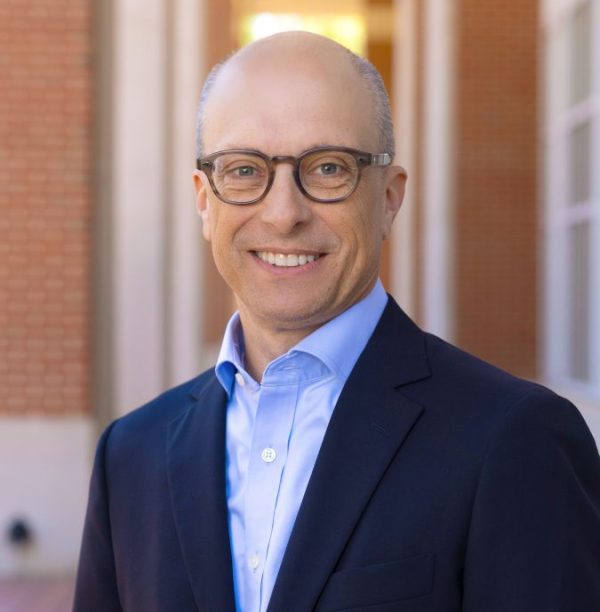
Since his first role at UNC Charlotte over 30 years ago as a graduate assistant in what was then the Office of Adult Students and Evening Services, Mark D’Amico has been dedicated to helping students gain access to the education they seek. Now as a professor of higher education, D’Amico has taken this mission and run with it.
D’Amico describes his early career experience as the true roots of his research interests. “When I was in admissions, no matter the institution, I had this assumption that if universities and community colleges in or near the same town had a good relationship, that transfer should be easy. But I spent way too much time sitting across a desk from students telling them how their credits would not transfer, how they were going to lose time, how they burned their Pell Grant eligibility and all the other ways that transfer could be inefficient without very careful planning. It took me shifting to work at a community college to realize that it wasn’t necessarily bad decision-making among students; it was that systems were really complicated and that we need a clearer picture of those systems and how students navigate them to be able to improve them.”
TRANSFER STUDENT EXPERIENCE
His longest-standing research investigation is the Transfer Research Project, a multimethod investigation of many aspects of life as a North Carolina transfer student moving from community college to a baccalaureate-granting institution. With generous support from the John M. Belk Endowment, D’Amico, along with fellow faculty Sandra Dika, Carmen Serrata and Cathy Howell, as well as many graduate students over the years, have studied transfer student behaviors, attitudes and outcomes to get a holistic picture of how students experience transfer, and then make recommendations for how institutions and state systems can improve that process.
D’Amico elaborated, “I use the word ‘experience’ intentionally. We are not just trying to understand the way that transfer systems are designed, although we do look at that from a policy perspective. We work to uncover student behaviors and how students navigate the process in an effort to learn more about their experiences, so we can inform decisions about how we structure transfer for them. Transfer policy and practice need to meet students where they are.”
The biggest undertaking of the project is a longitudinal qualitative study, where participants are interviewed over several years to track their progress and experiences over time. D’Amico shared, “Our team has probably conducted over 350 hours of interviews. And the newest part of this effort is on how community college students experience both transfer and careers simultaneously.”
Findings
While the Transfer Research Project will perhaps never be truly “finished,” D’Amico did share some of the lessons they’ve learned so far. “What we learned from looking at the publicly available data is that generally, only about 40% of students statewide who transfer vertically — from community colleges to universities — following what we call the primary transfer feeder pattern. For example, that would be like transferring from Central Piedmont to UNC Charlotte, Pitt Community College to ECU, Guilford Tech to UNC Greensboro. That means almost 60% are transferring somewhere else. While our state’s higher education systems have established good policy to support transfer students, there are still opportunities to embrace the notion of a full statewide transfer ecosystem. It can be challenging for students and advisors to navigate all of the different choices that may have different requirements.”
He also shared one of their earliest findings, before they even had funding to conduct this research. “Almost one in five students transferring from North Carolina community colleges to UNC system campuses are transferring with an associate degree in applied science, or an A.A.S, which is typically geared toward workforce preparation rather than transfer to a baccalaureate degree. But applied associate degrees are not a part of the statewide comprehensive articulation agreement; they are governed by institution-to-institution agreements, with the exception of a few specific degrees that have more uniform paths. In short, a lot of transfer is happening in a way that the overall statewide policy is not designed for.” D’Amico affirms that both institutional and system leaders pay attention to student needs, are interested in seeing the data, and are always working to improve the experiences of students, but the work is never done.
Impact
Studying these student experiences, parsing the data from these interviews and identifying the trends within them allows the team to share with both the institutions and the state at large about what’s working and what should be reexamined. Recommendations resulting from this research will all have one thing in mind: improving the student experience, so that more transfer students earn degrees and gain the skills they need to succeed in their careers.
Ultimately, the project’s aim is to support the state’s educational attainment goal of 2 million by 2030, aligned with the work of myFutureNC and partners. D’Amico said, “We’re really fortunate to have been networked to share our findings as the state moves forward on student outcomes, including community college transfer.”
NONCREDIT PROGRAMS AND WORKFORCE PELL
In recent years, short-term programs at community colleges that are designed for workforce preparation have gained increased attention. However, in many cases, the data have not matched the attention.
Enter the State Noncredit Data Project. D’Amico has partnered with colleague Michelle Van Noy, director of the Education and Employment Research Center at Rutgers University, and others across the industry to foster the development of a more robust data infrastructure for these kinds of programs. He shared, “Noncredit education has been known historically as “the hidden college” because the data are generally so lacking, partially because there is no required federal data reporting for noncredit programs.”
Without federal data collection, there are no universal standards to drive what states collect. D’Amico says that what they’ve found has been “all over the board, everything from inconsistent data collection at the state level, to no data collection at the state level, to a few states that do it really well. We are working to provide a common language.”
Findings
He and Van Noy have led their team to create Noncredit Data Taxonomy, now in its 3.0 version, to guide data collection efforts, working with eight different states to uncover what is being collected, what should be collected, and how that data can be used to improve these workforce preparation programs.
D’Amico shared,” That taxonomy really drives what we do in terms of documenting state practices and convening states to learn from our research and from one another. This work has also led directly into work around the new Workforce Pell legislation. Data are such an important part of documenting whether or not programs are eligible for Workforce Pell, and it’s also needed to show if the programs that are approved for workforce Pell then continue to meet the required performance metrics.”
Impact
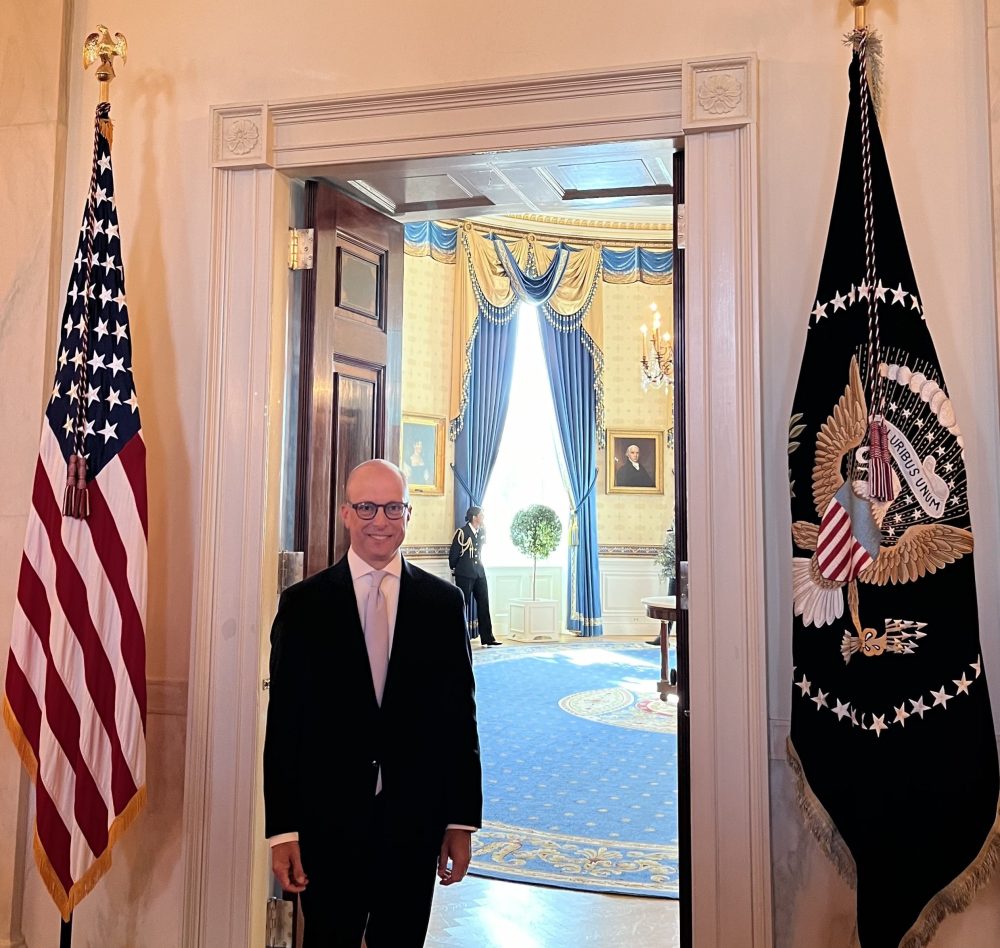
D’Amico shared that the project supports the creation of a national learning community that has had 49 states participate as well as specialized working groups for state-level leaders to convene and work toward improving their state noncredit data. These efforts are resonating with the higher education and policy communities, as this project even led to a presentation at a 2024 U.S. Department of Education Summit that included an invitation to the White House to share findings and the taxonomy with leaders nationally.
The implementation of Workforce Pell and the accompanying need for data is what has led D’Amico to be in the news so frequently in the last year, as this research has offered a reality check about data availability. The team’s work contributed to national efforts. The State Noncredit Data Project is a contributor to the Workforce Pell Data Collaborative, which is led by the Strada Education Foundation, and D’Amico also served on the National Governors Association’s Workforce Pell Readiness Academy’s National Alignment Committee.
Ultimately, Workforce Pell has the potential to offer need-based aid to students for short-term programs that have demonstrated their quality and workforce relevance, and the data are critical to those efforts.
D’Amico said that early adoption in this first year will vary widely: some states will have as little as zero to one approved Workforce Pell program, while North Carolina, not one of the eight main states partnered with the project, is on track to be one of the heaviest adopters.
And aside from Workforce Pell eligibility, D’Amico pointed out that “data are necessary more holistically to understand which of these are programs of quality, yielding workforce relevant credentials that are truly helping individuals get the education they need to improve their lives. Quality is the driver behind all of this.”
THROUGHLINE
His emphasis on program quality circles right back into the undercurrent that has run throughout D’Amico’s career: improving systems so that they better serve students who are putting forth the effort, regardless of program type, to better themselves. He spoke of a piece he wrote for the American Council of Education years ago where he identified the “no dead end” mindset that higher education should adopt to help community college students always have a path forward in their education, and that mindset is perhaps what has guided his work the most.
“It all points to ensuring that students have opportunities to gain the skills and education that they need to be successful throughout their careers,” he said. “And that no program is a dead end for additional education. You can’t do that without great policy; you can’t do that without being able to document success and quality, and you can’t do that without a data infrastructure that connects one student experience to another.”
While D’Amico’s work is largely centered on community colleges, he’s first and foremost an advocate not for any particular institution but for students. “My work is about collaborating with valued colleagues to use data that can inform policy and practice leading to improving the academic, societal and economic outcomes for students.”
By Caroline Freeman